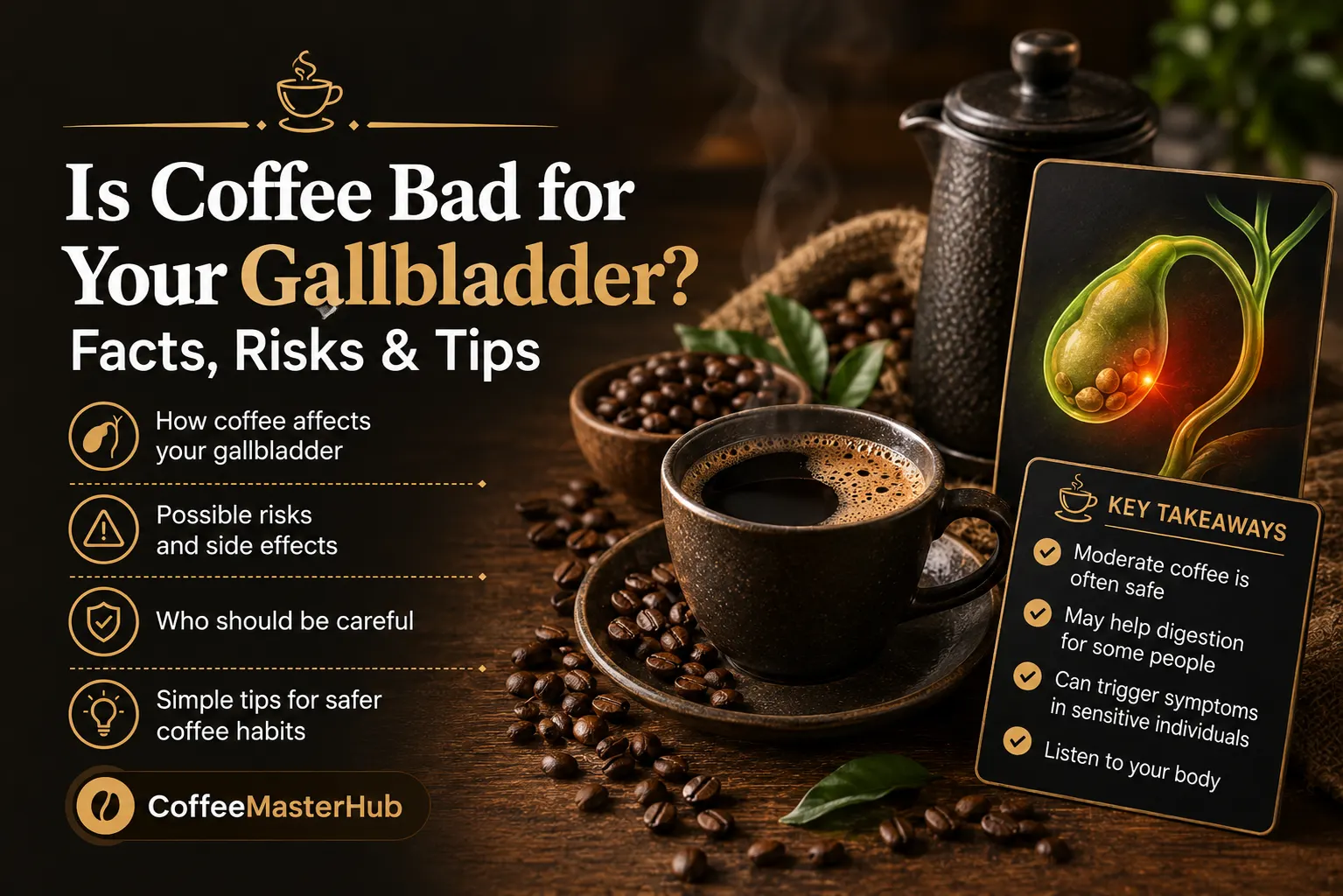
Is coffee bad for your gallbladder? Usually not. Moderate coffee does not appear to harm a healthy gallbladder, and some studies link regular intake to a lower gallstone risk.
It can trigger pain if you already have gallstones or inflammation, so your symptoms and your doctor’s advice matter most.
Coffee is part of daily life for millions of people, so it is natural to worry when gallbladder trouble appears. One friend says quit it, while another says it is fine.
The answer depends on your situation. This guide explains how coffee affects bile, what research says about gallstones, and how to enjoy your cup more comfortably.
How Coffee Affects Your Gallbladder and Bile
Your gallbladder is a small pouch under the liver. It stores bile, a fluid that helps digest fats, and squeezes it into the small intestine after you eat.
Coffee can nudge this process along. It appears to stimulate a hormone called cholecystokinin (CCK), which tells the gallbladder to contract. Both caffeine and other compounds in coffee may play a part, since decaf can cause a response too.
For a healthy gallbladder, this contraction is normal. With gallstones or inflammation, the same squeezing can push a stone against a duct opening and cause pain.
Coffee and Gallstones: What Research Suggests
Gallstones are hardened deposits that form from cholesterol or bilirubin in bile. Many people have them without symptoms. Several large observational studies have linked regular coffee drinking with a lower chance of symptomatic gallstones.
One theory is that coffee encourages regular gallbladder emptying, so bile does not sit too long. This remains a theory, not a proven mechanism.
Observational studies also cannot prove cause and effect, because coffee drinkers may differ in other habits. Coffee is not a prevention method, and nobody should start drinking it to avoid gallstones.
Gallstone Symptoms and When Coffee May Trigger a Gallbladder Attack
A gallbladder attack happens when a stone briefly blocks a bile duct. Coffee does not create the stone, but the contraction it prompts may set off pain in someone who already has one. Watch for discomfort soon after coffee, especially with a fatty meal.
Common signs include:
- Pain in the upper right or center of the abdomen, under the ribs
- Pain spreading to the right shoulder or back
- Nausea or vomiting
- Bloating after fatty meals
- Pain that lasts 30 minutes or longer
Seek urgent care if pain is severe, lasts several hours, or comes with fever, chills, yellow skin or eyes, or dark urine. These can signal infection or a blocked duct.
Decaf Coffee vs Regular Coffee for Your Gallbladder
Many people assume decaf is safer. The evidence is less clear, because decaf still contains compounds that may stimulate digestion, and research on decaf and gallstone risk is less consistent.
| Factor | Regular Coffee | Decaf Coffee |
|---|---|---|
| Caffeine per 8 oz cup | Roughly 80 to 100 mg | Roughly 2 to 5 mg |
| Gallbladder response | Likely stimulates contraction | May still cause some response |
| Gallstone research | Several studies link it to lower risk | Evidence is less consistent |
| Sensitive stomach | More likely to irritate | Often gentler |
If coffee seems to trigger symptoms, switching to decaf is worth a try. Keep notes, because what you add to the cup often matters more than the beans.
Coffee With Cream, Butter and Sugar: The Hidden Trigger
Often the coffee itself is not the main problem. Heavy cream, butter coffee and whipped toppings add fat, which is a strong signal for the gallbladder to contract.
A small black coffee after a light breakfast asks far less of your gallbladder than a large drink loaded with cream. Try these swaps:
- Use low fat milk or a plant based milk
- Skip butter or oil blends during flare ups
- Cut syrups and whipped toppings
- Choose a smaller cup size
Coffee After Gallbladder Removal
Without a gallbladder, bile drips steadily into the intestine instead of being stored. Coffee’s stimulating effect on the gut can still cause loose stools, cramps or urgency, especially in the first weeks after surgery.
Most people return to coffee without trouble. Start with half a cup, drink it with food, and wait a few days before increasing. If diarrhea continues, speak with your doctor.
Simple Coffee Habits for a Gallbladder Friendly Diet
Small adjustments can make coffee more comfortable:
- Start with a small cup of 6 to 8 ounces and notice how you feel.
- Drink it with or after a light meal instead of on an empty stomach.
- Keep it black or lightly milked.
- Write down any pain or bloating for a week to spot patterns.
- Stay within moderate intake. For most healthy adults, up to about 400 mg of caffeine daily, roughly 3 to 4 cups, is the usual guideline.
Coffee is only one piece of the picture. Regular meals, fiber rich foods and limiting fried food help more. Crash diets and rapid weight loss are linked to gallstone formation, so gradual change is safer.
Common Coffee Mistakes With Gallbladder Problems
| Mistake | Why It Matters | Better Option |
|---|---|---|
| Coffee on an empty stomach | Triggers contraction with no food to buffer it | Pair it with a light snack like toast |
| Butter or heavy cream coffee | Fat causes a strong gallbladder squeeze | Use low fat milk |
| Ignoring repeated pain | It may be a gallstone attack | Note the timing and call your doctor |
| Skipping meals and relying on coffee | Long gaps may slow gallbladder emptying | Eat regular, balanced meals |
Conclusion
So, is coffee bad for your gallbladder? For most people, no. Moderate coffee seems safe for a healthy gallbladder and may even be linked to fewer gallstones, though that link is not proof.
The risk is mainly for people with existing gallstones, gallbladder inflammation or recent surgery. In those cases, a small cup with food and little added fat is a sensible approach.
Pay attention to your body, track your symptoms, and talk to your doctor if pain keeps returning. This article is general information, not medical advice.
Frequently Asked Questions
Current research does not show that coffee causes gallstones. Several large observational studies link regular coffee intake with lower gallstone risk. Gallstones are more strongly tied to excess weight, rapid weight loss, family history, age and being female. Coffee may still trigger pain if stones are already present.
Many people with silent gallstones drink coffee without problems. If coffee brings on pain, bloating or nausea, cut back or pause it and tell your doctor. Take extra care with creamy or buttery drinks, which add fat. Your doctor can give advice that fits your treatment plan.
Black coffee is usually easier on the gallbladder than drinks loaded with cream, butter or syrup, because it adds almost no fat. It can still stimulate contraction, so it may bother you if you have stones. Try a small cup with food and watch how you feel.