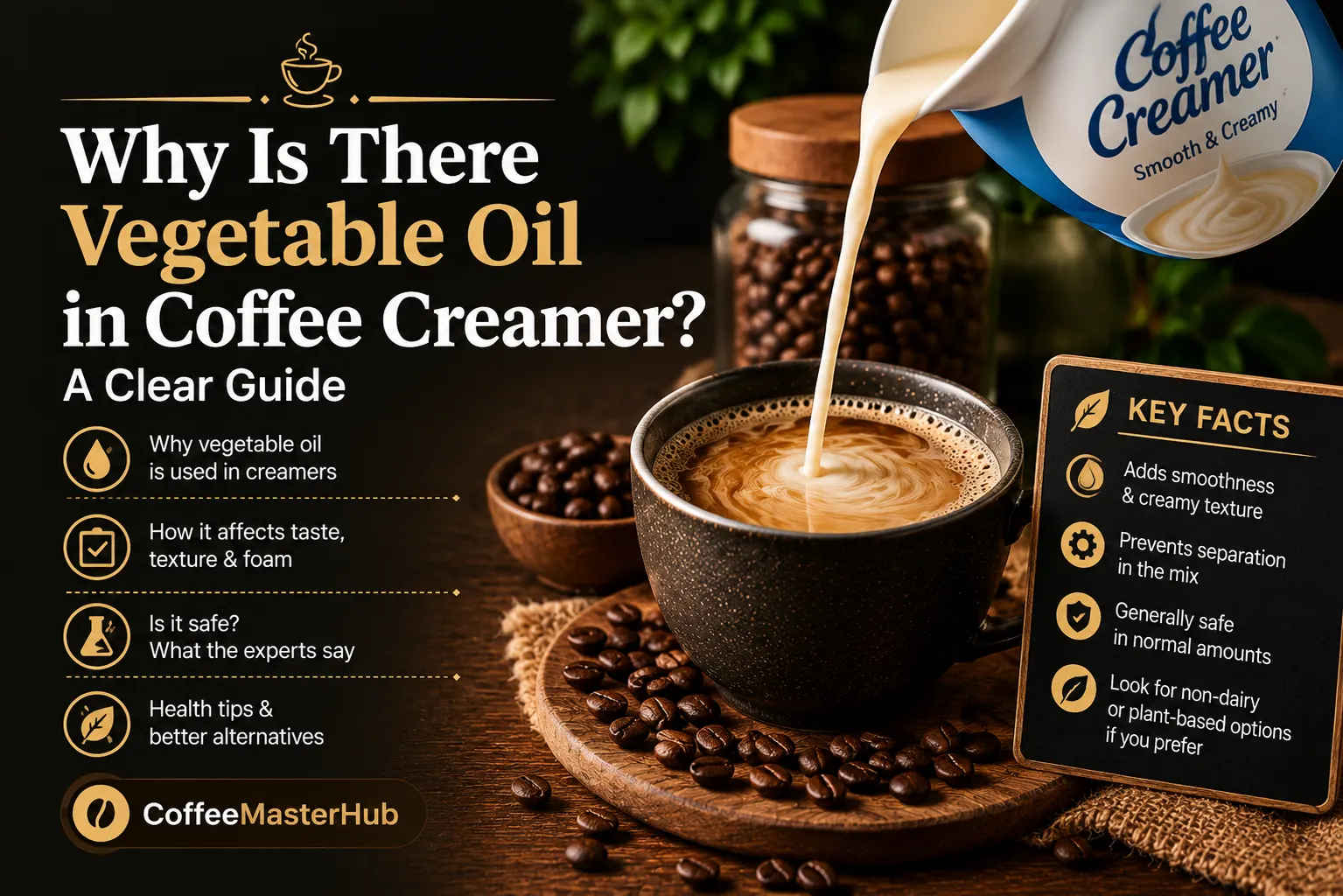
Why is there vegetable oil in coffee creamer? Oil replaces milk fat, giving non dairy creamer its rich, creamy feel and white color. It also helps the creamer blend smoothly into hot coffee without looking thin or watery.
In normal amounts it is not a safety concern, though sugar and saturated fat are worth checking.
Flip over a bottle of creamer and you will often find vegetable oil near the top of the ingredient list. That surprises many people, who expect cream or milk instead.
This guide explains what the oil does, which types are used, whether it is a health concern, and what you can use instead.
Non Dairy Coffee Creamer Ingredients: What Is Inside?
Most liquid creamers are built from a short list of ingredients. Water and sugar usually come first, followed by vegetable oil and a handful of helpers that keep everything stable.
- Water: the base that makes it pourable
- Sugar or sweeteners: flavor and body
- Vegetable oil: richness and a creamy feel
- Sodium caseinate: a milk protein that adds body and whitening
- Emulsifiers and thickeners: keep oil and water from separating
- Buffer salts: help prevent curdling in hot, acidic coffee
- Natural and artificial flavors: vanilla, hazelnut and so on
Sodium caseinate comes from milk, so many “non dairy” creamers are not suitable for people with milk allergies or vegan diets. Always check the allergen line.
Why Is There Vegetable Oil in Coffee Creamer? The Main Reasons
Milk fat is what makes real cream feel smooth and rich. Creamer makers swap in vegetable oil to copy that effect, often at a lower cost and with a longer shelf life.
Here is what the oil actually does:
- Mouthfeel: tiny oil droplets coat your tongue and make coffee taste fuller
- Color: the droplets scatter light, turning dark coffee a creamy tan
- Flavor balance: fat softens bitter and harsh notes
- Shelf life: vegetable oil keeps better than fresh dairy fat
- Cost: oil is often cheaper than dairy cream
Sugar alone cannot do this. Without fat, a creamer would taste sweet but thin and would barely change the color of your coffee.
Which Types of Vegetable Oil Are Used in Creamer?
Labels often say “vegetable oil” and then name the exact one in brackets. Common choices include:
- Palm or palm kernel oil: solid at room temperature and high in saturated fat
- Soybean oil: neutral flavor and mostly unsaturated fat
- Canola oil: neutral flavor and lower in saturated fat
- Coconut oil: adds richness and saturated fat, sometimes a slight flavor
Partially hydrogenated oils used to be common in creamers and were a source of artificial trans fat. They have been largely phased out of foods in the United States, but it is still smart to scan the label for the words “partially hydrogenated.”
Emulsifiers in Coffee Creamer: How Oil and Water Stay Mixed
Oil and water do not mix on their own. Emulsifiers such as mono and diglycerides wrap around tiny oil droplets so they stay spread through the creamer instead of floating to the top.
Thickeners such as gellan gum or carrageenan keep those droplets suspended on the shelf. Buffer salts help stop the creamer from curdling when it meets hot, acidic coffee.
This is also why shaking the bottle before pouring helps.
Common Coffee Creamer Types Compared
| Creamer type | Main fat source | Texture | Good to know |
|---|---|---|---|
| Half and half | Milk fat | Light and creamy | Contains dairy, shorter life once opened |
| Heavy cream | Milk fat | Rich and thick | Very rich, a little goes far |
| Oil based liquid creamer | Vegetable oil | Smooth and sweet | Often has sugar and milk protein |
| Powdered creamer | Dried vegetable oil | Light | Long shelf life, easy to store |
| Oat or almond creamer | Plant oils or nuts | Varies | Often still contains added oil |
Oat or almond creamers often still contain added oil, so a plant based label does not mean oil free.
Is Vegetable Oil in Creamer Healthy?
In the small amounts used in a splash of creamer, the oil itself is not a major concern for most healthy adults. The bigger questions are how much creamer you use and what else comes with it.
Sugar often adds more concern than the oil. Many flavored creamers contain a few grams of sugar per tablespoon, and a heavy pour can add up over a day.
Things worth watching:
- Saturated fat from palm or coconut oil if you drink several cups daily
- Added sugar, especially in flavored varieties
- Partially hydrogenated oils, which are best avoided
- Milk protein, if you have an allergy or follow a vegan diet
- Serving size, since the label usually lists one tablespoon and many pours are two or three
People with heart conditions, diabetes or allergies should ask a doctor or dietitian what suits them.
How to Read a Creamer Label in Five Steps
- Check the serving size. Labels usually use one tablespoon, which is smaller than most real pours.
- Read the first three ingredients. They make up most of the product.
- Look for the type of oil. Palm, soybean, canola and coconut are common.
- Scan for “partially hydrogenated.” Skip the product if you see it.
- Compare sugar. Unsweetened or lightly sweetened versions have less added sugar.
Common Creamer Mistakes
- Assuming “non dairy” means free of milk protein
- Trusting front label claims instead of the ingredient list
- Pouring without counting servings
- Using a bottle well past its date or left open
Healthier Coffee Creamer Alternatives
If you want less processed options, there are simple swaps:
- A splash of milk or half and half
- Unsweetened oat, soy or almond milk
- Unsweetened creamers with a short ingredient list
- Cinnamon or cocoa for flavor without added sugar
Try one change at a time. Cutting from two tablespoons to one is often easier than switching everything overnight.
Conclusion
So, why is there vegetable oil in coffee creamer? It stands in for milk fat, giving the creamer its smooth feel, creamy color and longer shelf life, while emulsifiers keep everything blended.
The oil itself is rarely the biggest issue. Sugar, saturated fat and portion size usually matter more, and anyone with allergies should watch for milk protein.
Read the label, measure your pour, and choose a version that fits your taste and health needs. If you have a medical condition, ask your doctor for personal advice.