
Walk into almost any busy coffee shop and you will see several cup sizes behind the counter. 8oz. 12oz. 16oz. At first glance, choosing between them seems easy. Bigger cups hold more coffee, so why not simply offer the largest size? The answer is that cup size affects much more than volume.
It changes the way a drink is made, how it looks in the customer’s hand, how much milk or ice goes into it and even how a café manages its menu. For many coffee businesses, the most useful approach is to match cup sizes to the drinks they actually sell.
8oz: A Good Fit for Smaller Milk Drinks
An 8oz cup works particularly well when the coffee itself is meant to stay at the centre of the drink.
It is a common size for smaller lattes, cappuccinos and other milk-based drinks where the balance between espresso and milk matters. A smaller cup also gives the drink a more concentrated feel. There is less room for extra milk, syrup or ice to take over the flavour.
For cafés that focus heavily on espresso-based drinks, an 8oz option can make sense as part of a more traditional menu. It may also be useful for customers who want a smaller drink rather than simply the largest available option.
12oz Is Often the Middle Ground
For many cafés, 12oz is the easiest size to work with. It offers more volume than a small cup without moving into the oversized territory of a 16oz drink. That makes it suitable for a wide range of everyday orders.
A 12oz cup can work well for lattes, flavoured coffees, iced drinks and other popular café staples.
There is also a practical reason for its popularity: it gives customers a noticeable step up from the small size without changing the drink too dramatically. For businesses trying to keep their menu simple, 12oz can be a useful standard size around which to build.
16oz Is About More Than “More Coffee”
A 16oz cup is often associated with larger takeaway drinks. It can be a strong choice for iced coffees, cold drinks, large lattes and beverages where customers expect a generous serving. But there is a catch. A larger cup does not automatically mean more espresso.
The extra space may instead be filled with milk, water, ice or flavouring, depending on the recipe. A café needs to make sure its drink recipes are adjusted so that the larger format still tastes balanced.
This matters especially with espresso-based drinks. Simply adding more liquid to a larger cup can produce a drink that feels weaker rather than better.
Cup Size Should Follow the Menu
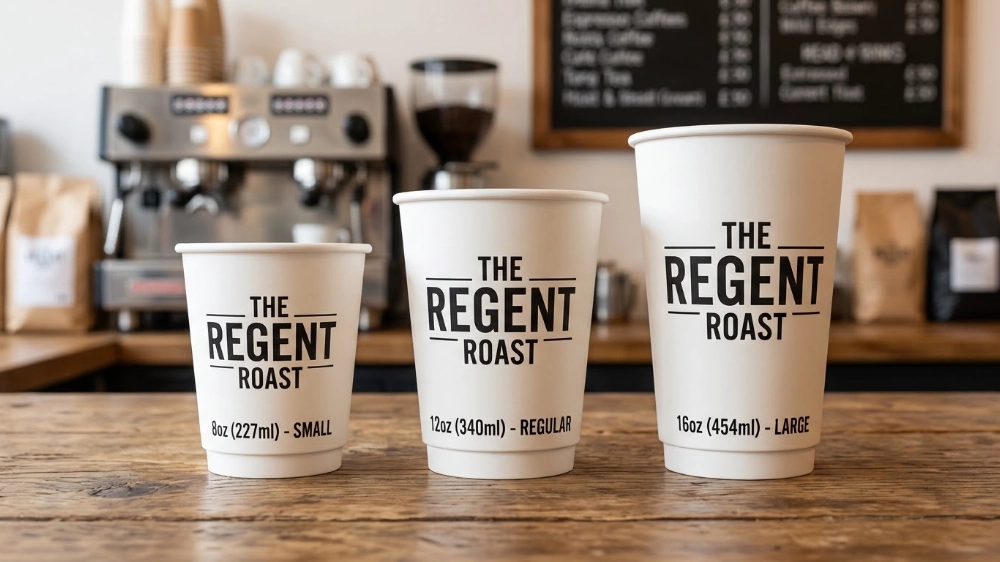
One of the easiest mistakes is choosing cup sizes first and figuring out the menu later. A better approach is the other way around. Look at the drinks customers actually order. A café with a traditional espresso and cappuccino menu may have little reason to carry a very large hot cup. A business selling iced lattes and flavoured cold drinks may need more capacity.
Seasonality matters too. During warmer months, larger iced drinks may become more popular. In colder weather, customers may prefer hot drinks in smaller or medium sizes. The goal is not to offer every possible size. It is to carry the sizes that make sense for the menu.
Bigger Cups Also Change Your Recipes
Cup size affects recipes more than many customers realise. Suppose a café uses the same espresso shot in an 8oz and 16oz latte. The amount of milk doubles, but the coffee does not. That can create a noticeable difference in flavour.
Larger drinks may therefore require recipe adjustments, such as additional espresso, different milk ratios or changes to the amount of ice and syrup. Consistency becomes especially important for multi-location businesses. Customers expect the same drink to taste similar whether they order it from one branch or another.
The Right Size Can Make Service Easier
Cup sizes also affect the back-of-house operation. Too many options mean more inventory, more storage space and more opportunities for staff to grab the wrong cup during a busy rush.
A café using three well-chosen sizes may have a smoother workflow than one carrying five or six formats that are only used occasionally.
Storage is another consideration. Cups take up more space than people expect, particularly when a business buys in bulk. Choosing sizes that cover most of the menu can simplify purchasing without limiting customers too much.
Customers Have Their Own Idea of “Large”
There is also a consumer expectation to consider. A 12oz drink may feel large to one customer and completely normal to another. Cup sizes are not interpreted in isolation; people compare them with what they have seen at other cafés.
That means a café should think about how its size names and physical cups fit together. Clear menu descriptions can help. Customers are less likely to feel confused when the difference between small, regular and large is obvious.
Cost Matters, But So Does Waste
Larger cups generally use more material and take up more storage and transport space. The difference in cost per cup may look small, but it becomes more noticeable when a café uses thousands of cups every month.
There is also the issue of unnecessary capacity. A drink served in a cup much larger than required may simply create more packaging waste without adding much value. That does not mean smaller is always better. It means the cup should be appropriately sized for the drink.
So Which Size Should a Café Choose?

There is no universal winner. An 8oz cup works well for smaller, espresso-focused drinks. A 12oz cup is a versatile everyday option for many menus. A 16oz cup makes more sense when customers regularly order larger hot or iced drinks.
Many cafés will find that a combination of two or three sizes covers most of what they need. The important part is consistency. Cup size, recipe, lid fit and presentation should all work together.
A good coffee cup is not simply the one that holds the most liquid. It is the size that suits the drink, the customer and the way the café operates. That is ultimately why choosing the right cup size is a menu decision as much as a packaging decision.
About the Author
Muhammad Hammad Abbas started Coffee Master Hub, where he shares useful coffee guides and brewing tips based on his own research and experience. He works to make coffee knowledge easier to understand and tries out different methods to help readers make better coffee at home.