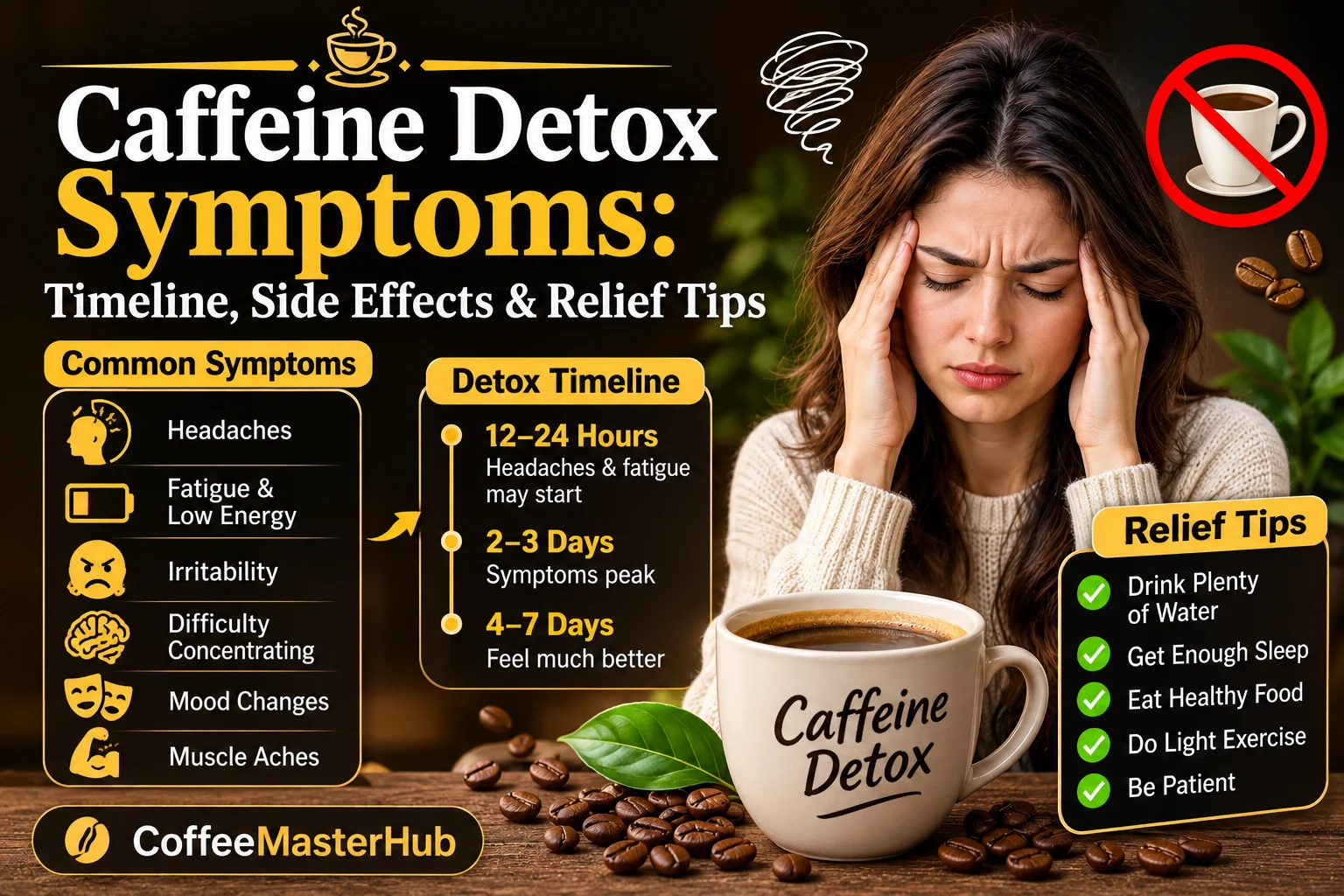
Cutting back on coffee often brings a dull headache, heavy tiredness, and a short temper within a day. These effects are real. They are part of a recognized response called caffeine withdrawal.
For most people, the symptoms are temporary and manageable. This guide explains what happens in your body, how long it lasts, and how to make the process easier.
What Happens During a Caffeine Detox
Caffeine works mainly by blocking adenosine receptors in the brain. Adenosine is a chemical that builds up during the day and makes you feel sleepy. When caffeine occupies those receptors, you feel more alert.
With regular intake, the body adapts. You may need more caffeine to get the same effect. When you stop suddenly, adenosine can act more strongly than usual, and blood vessels in the brain, which caffeine had narrowed, widen. This is the commonly cited explanation for withdrawal headaches and fatigue.
“Detox” is a popular term rather than a medical one. Your body is not flushing out stored toxins. It is simply readjusting to life without a stimulant it had grown used to.
Common Caffeine Withdrawal Symptoms
Headache is the most frequent symptom. It is often throbbing and can feel worse when you move or bend over.
Other common side effects include:
- Fatigue and drowsiness
- Trouble concentrating, often described as brain fog
- Irritability, low mood, or mild anxiety
- Nausea or an unsettled stomach
- Muscle aches or a flu-like feeling
Severity varies widely. Some people notice very little, while others struggle to work normally for a day or two. Your usual daily intake, how long you have been drinking coffee, and how quickly you cut back all play a role.
Caffeine Withdrawal Timeline
Research reviews generally describe a pattern like the one below. Your own experience may be shorter or longer.
| Stage | Typical Timing | What You May Notice |
|---|---|---|
| Onset | 12–24 hours after your last caffeine | Mild headache, sleepiness, low focus |
| Peak | About 20–51 hours in | Strongest headache, fatigue, irritability |
| Improvement | Days 3–6 | Symptoms ease gradually |
| Resolution | Around 2–9 days for most people | Energy and mood return to normal |
Some people report lingering tiredness for up to two weeks. If symptoms last much longer, other causes such as poor sleep may be involved.
Cold Turkey vs. Gradual Reduction
Stopping all at once is the fastest route, but it is usually the hardest. Tapering spreads the adjustment over more days and tends to feel gentler.
| Approach | Advantages | Drawbacks |
|---|---|---|
| Cold turkey | Quicker finish, simple rule | Stronger headaches and fatigue |
| Gradual taper | Milder symptoms, easier to sustain | Takes longer, needs tracking |
For most people, a taper is the more practical choice. It is especially helpful if you drink several cups a day.
A Simple Tapering Example
A typical 8-ounce cup of brewed coffee contains roughly 80–100 mg of caffeine, though this varies by bean, roast, and brew method. Suppose you drink four cups daily.
Reduce to three cups for three or four days, then two, then one. Alternatively, keep your cup count the same and blend regular and decaf coffee, shifting the ratio toward decaf every few days.
Keep in mind that decaf still contains a small amount of caffeine. That is helpful during a taper, but it means decaf is not caffeine-free.
Relief Tips That Actually Help
No method removes withdrawal entirely, but these steps can soften it.
Protect Your Sleep
Fatigue is the symptom you will feel most, so sleep matters. Go to bed at a consistent time and avoid screens late at night. Do not use caffeine in the afternoon to compensate, as it can disrupt sleep the following night.
Stay Hydrated and Eat Regularly
Dehydration and skipped meals can worsen headaches and low energy. Drink water throughout the day and eat balanced meals with protein and complex carbohydrates. Steady blood sugar helps you avoid an extra energy crash.
Move Gently
A short walk can lift mood and alertness without any stimulant. Avoid intense workouts on the hardest day, usually day two, if you feel drained.
Manage the Headache Carefully
Over-the-counter pain relievers may help, but follow the label directions. Check the ingredients, because some headache products contain caffeine. Those would work against your goal and may prolong the adjustment.
Keep the Ritual
Part of coffee’s pull is the routine. Replace the morning cup with a warm drink you enjoy, such as herbal tea or hot water with lemon. The habit stays, and the caffeine goes.
Common Mistakes to Avoid
Small errors can make the process harder than it needs to be:
- Switching to another stimulant. Energy drinks, strong tea, and some sodas simply move the dependence elsewhere.
- Overlooking hidden caffeine. Chocolate, certain pain relievers, and pre-workout supplements can contain it.
- Starting during a stressful week. Pick a calmer period, such as a weekend or a lighter workload.
- Expecting instant energy. Your natural alertness rhythm needs several days to recover.
When to Talk to a Doctor
Withdrawal symptoms are usually mild to moderate. See a healthcare professional if you have a severe or unusual headache, symptoms lasting well beyond two weeks, chest pain, or a racing heartbeat.
It is also wise to ask a professional first if you are pregnant, have a heart condition, or take regular medication. This article is educational and is not medical advice.
Conclusion
Caffeine withdrawal is uncomfortable, but it is predictable and temporary. Most symptoms begin within a day, peak around day two, and fade within about a week.
To make it easier, taper gradually, sleep well, drink water, and keep a comforting morning routine. Once the adjustment passes, many people find their energy feels steadier without relying on a daily dose.
FAQs
How long do caffeine withdrawal headaches last?
They usually begin within 12–24 hours of your last caffeine and peak around the second day. Most fade within several days, though the exact length varies from person to person.
Is it better to quit coffee cold turkey or gradually?
Both work. Gradual reduction usually produces milder symptoms, while quitting cold turkey is faster but often harder. Choose the approach you can realistically stick with.
Can decaf coffee help during a caffeine detox?
Yes, it can help as a stepping stone. Decaf keeps the taste and routine while lowering your caffeine intake, though it still contains a small amount of caffeine.
Does caffeine withdrawal cause anxiety?
Some people experience irritability, low mood, or mild anxiety while adjusting. For many, anxiety linked to high caffeine intake actually improves after the withdrawal period passes. Seek advice if anxiety feels severe or persistent.
Will I feel more energetic after quitting caffeine?
Some people do, particularly if caffeine was disrupting their sleep. Results vary, so it is best to judge after the first one to two weeks rather than during withdrawal.