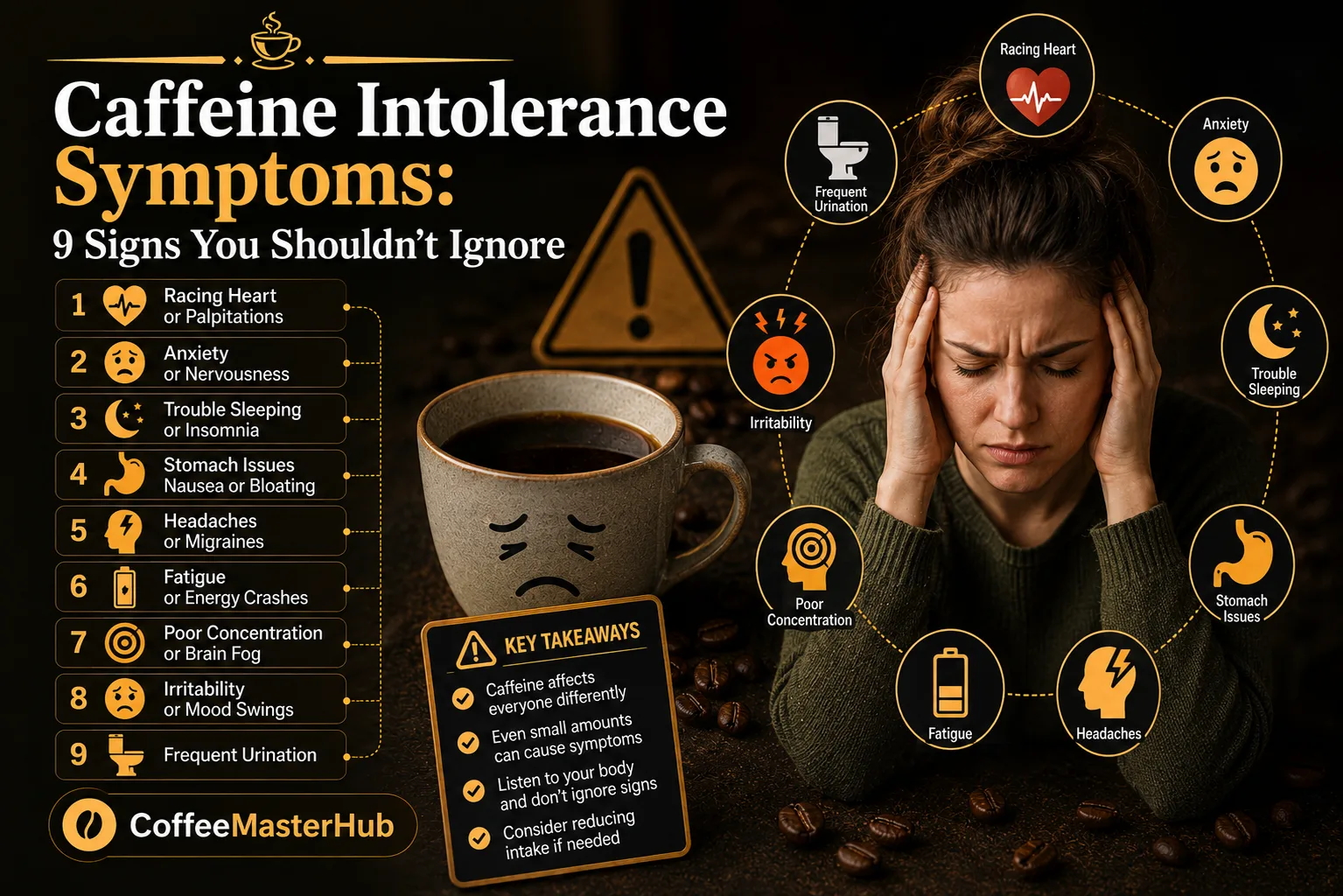
A cup of coffee that leaves your heart pounding, your hands shaky, and your stomach in knots is not just “strong coffee.” For some people, even small amounts of caffeine trigger uncomfortable reactions.
This guide covers the nine most common signs, how intolerance differs from allergy and withdrawal, and what you can do about it.
What Caffeine Intolerance Really Means
“Caffeine intolerance” is a common phrase, not a formal medical diagnosis. It usually describes caffeine sensitivity: a strong reaction to an amount most people tolerate well.
Part of the explanation is how your body processes caffeine. The liver enzyme CYP1A2 does most of the work, and genetic differences can make some people clear caffeine more slowly. Slower clearance means the stimulant stays active longer.
Other factors can also lower your tolerance, including certain medications, pregnancy, anxiety disorders, and changes in sleep or stress.
Sensitivity vs. Allergy vs. Withdrawal
These three are often confused, but they are different situations.
| Condition | What Causes It | Typical Pattern |
|---|---|---|
| Caffeine sensitivity (intolerance) | Slow processing or high responsiveness | Symptoms soon after small amounts |
| Caffeine allergy | Immune system reaction (rare) | Hives, swelling, breathing trouble |
| Caffeine withdrawal | Stopping regular intake | Headache and fatigue after cutting back |
True caffeine allergy is considered rare. Reactions to coffee are more often caused by sensitivity or by other compounds in the drink.
9 Caffeine Intolerance Symptoms to Watch For
1. Racing Heart or Palpitations
A fast, pounding, or irregular heartbeat is one of the most noticeable signs. It often appears within an hour of drinking coffee.
2. Jitters and Tremors
Shaky hands, muscle twitching, or an unsteady feeling can occur even after one small cup. This is a stimulant effect on the nervous system.
3. Anxiety or Restlessness
Feeling on edge, nervous, or unable to sit still is common in sensitive people. Caffeine can intensify existing anxiety.
4. Trouble Sleeping
Caffeine has a half-life of several hours in many adults, so afternoon coffee can interfere with falling asleep. Sensitive people may notice poor sleep even from a morning cup.
5. Headaches
Some people get headaches after caffeine, not just when stopping it. If this happens repeatedly, take note.
6. Digestive Upset
Nausea, stomach pain, loose stools, or heartburn can follow coffee. Coffee stimulates stomach acid and gut activity, which affects some people more than others.
7. Sweating or Flushing
Feeling hot, flushed, or sweaty after a drink is a sign your body is reacting strongly to the stimulant.
8. Dizziness or Lightheadedness
Feeling faint or unsteady can happen alongside a fast heartbeat. If it is severe or comes with chest pain, seek medical attention.
9. Irritability and an Energy Crash
Some people feel wired first, then drained and moody a few hours later. This swing can leave you reaching for more caffeine, which makes the cycle worse.
How Much Caffeine Is Too Much?
For most healthy adults, the U.S. FDA cites about 400 mg of caffeine per day as an amount not generally associated with negative effects. Sensitive people may react well below that.
The amounts below are approximate and vary by brand, bean, and brewing method.
- 8 oz brewed coffee: roughly 95 mg
- Single espresso shot: roughly 60–65 mg
- 8 oz black tea: roughly 40–50 mg
- 8 oz decaf coffee: a few milligrams, not zero
Roast level is a weak predictor of caffeine. Brew method, serving size, and bean type matter more. Robusta, for example, generally contains more caffeine than Arabica.
Practical Ways to Find Your Limit
If you suspect sensitivity, a simple approach works better than guessing.
Keep a Short Log
For one to two weeks, note what you drank, when, and how you felt. Patterns usually appear quickly, such as symptoms only after a second cup.
Reduce Gradually
Cutting back slowly is gentler than stopping suddenly, which can cause withdrawal headaches and fatigue. Try replacing one cup at a time with half-caff or decaf.
Adjust Timing and Context
Drink coffee with food, not on an empty stomach, and avoid it late in the day. Smaller cups and lighter brews also lower your total dose.
Check Hidden Sources
Tea, soda, chocolate, energy drinks, and some pain relievers contain caffeine. These can add up without you noticing.
Common Mistakes
- Assuming it’s just anxiety. Caffeine can mimic or worsen anxiety, so it is worth testing.
- Switching to energy drinks. Many contain more caffeine than coffee.
- Quitting abruptly. A sudden stop often causes withdrawal symptoms that feel like a new problem.
- Ignoring medication interactions. Some medications change how your body handles caffeine.
When to See a Doctor
Seek prompt care for chest pain, fainting, a very irregular heartbeat, or symptoms that persist after you cut back. Get emergency help for hives, facial swelling, or trouble breathing.
Talk to a healthcare professional before changing your intake if you are pregnant, have a heart condition, or take regular medication. This article is educational and is not medical advice.
Conclusion
Caffeine intolerance is about how your body responds, not how much coffee you “should” be able to handle. If you notice several of these signs, treat them as useful information.
Track your symptoms, reduce your intake gradually, and consider decaf or smaller servings. If symptoms are severe or unusual, speak with a doctor.
FAQs
Can you suddenly develop caffeine intolerance?
Yes. Sensitivity can change with age, medications, pregnancy, stress, or sleep patterns. A drink you once handled easily may start causing symptoms.
How long do caffeine intolerance symptoms last?
Many people feel effects for several hours, since caffeine can remain active in the body for a long time. Duration varies depending on how quickly you process it.
Is decaf coffee safe if I’m sensitive to caffeine?
Often yes, but decaf still contains a small amount of caffeine. Very sensitive people may still notice effects, especially after several cups.
Can I build tolerance to caffeine again?
Some people tolerate more after slowly increasing intake, but this does not work for everyone. If symptoms are uncomfortable, staying at a lower level is reasonable.