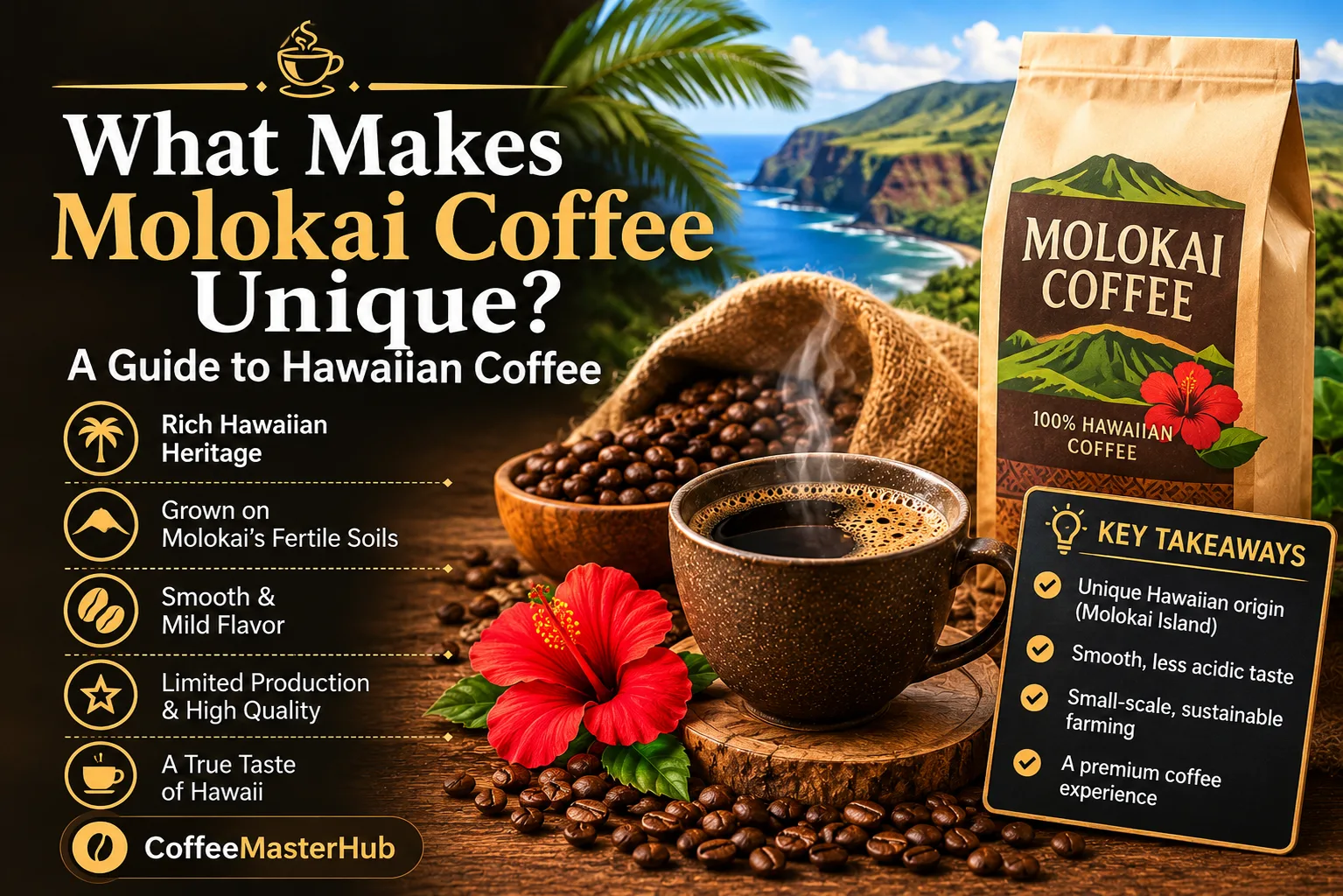
What makes Molokai coffee unique is its small scale, quiet island setting, and smooth, low acidity cup. It grows on Molokai’s central plains, far from the crowds of Kona, and tends to taste mellow and chocolatey. It is a rare chance to taste Hawaiian coffee from a lesser known island.
If you have ever wondered what makes Molokai coffee unique, you are not alone. Most people know Kona, yet Molokai quietly grows its own beans on a small, rural island. This guide to Hawaiian coffee covers where it comes from, how it tastes, and how to brew it well.
Along the way, we will compare it with Kona and explain the labels that confuse many shoppers. No coffee experience is needed.
Molokai Coffee Farms and Where the Beans Come From
Molokai is a small, quiet island between Oahu and Maui. It has few crowds and a slow pace, and that mood carries into its coffee.
Much of the coffee grows on the island’s central plains, land once used for pineapple. Many farms are small, so production is tiny compared with Kona. That is why Molokai beans can be harder to find.
Hawaii is one of the few places in the United States where coffee grows commercially. Molokai adds its own mix of sun, trade winds, and red soil. Every farm and harvest still tastes a little different.
The main factors behind Molokai coffee farms include:
- Sunny days and steady trade winds
- Rich reddish soil on the central plains
- Small farms with careful harvesting
- Limited volume, which keeps supply modest
What Makes Molokai Coffee Unique: The Flavor Profile
Molokai coffee is usually described as smooth and mellow. Many drinkers notice gentle sweetness, a rounded body, and low acidity that makes each sip easy to enjoy.
Common tasting notes include milk chocolate, nuts, and soft caramel. Some roasts add a hint of fruit. Roast level matters, since a lighter roast tastes brighter than a dark one.
If you find most coffee too sharp, low acidity coffee like this is a friendly place to start. It also pairs well with a splash of milk.
Flavor is personal. Two bags labeled Molokai can taste different depending on the farm, roast date, and brewing method.
Kona vs Molokai Coffee: How They Compare
Kona is the most famous Hawaiian coffee, so it makes a natural comparison. Both can be excellent, and the differences come down to scale, availability, and style.
| Feature | Molokai Coffee | Kona Coffee |
|---|---|---|
| Fame | Lesser known | Globally recognized |
| Availability | Limited, often from small roasters | Widely sold |
| Typical flavor | Smooth, mellow, low acidity | Often described as balanced and aromatic |
| Price | Moderate to premium | Often premium |
| Best for | Curious drinkers | Fans of the classic name |
Neither is better for everyone. If you want the familiar classic, Kona is a safe pick. If you enjoy discovering something less common, Molokai is worth trying.
Hawaiian coffee costs more than supermarket coffee because of labor costs and limited land. Expect to pay a premium for either one.
Hawaiian Coffee Beans and How to Buy Genuine Molokai Coffee
Hawaiian coffee beans are mostly Arabica, a species known for sweeter, more nuanced flavor. Typica is one of the older varieties grown in the islands.
Labels matter. A bag marked 100% Molokai should contain only Molokai beans, while a blend with Hawaiian coffee can include beans from elsewhere.
Kona blends show this clearly. A Kona blend only needs to contain 10% Kona coffee, so the rest can come from other places.
Check the package for these details:
- The words 100% and the island name
- A roast date, ideally within the last few weeks
- A whole bean option, so you can grind fresh
- A farm or roaster name you can look up
How to Brew Molokai Coffee at Home
A gentle method lets the smooth flavor shine. This pour over routine makes one large mug using a dripper, paper filter, kettle, scale, and grinder.
- Weigh 20 grams of beans and grind them medium, like coarse sand.
- Heat water to about 200°F, or let boiling water rest for 30 seconds.
- Rinse the filter with hot water, then discard the water.
- Add the grounds, pour 40 grams of water, and wait 30 seconds for the bloom.
- Pour slowly in circles until the scale reads 320 grams.
- Let it drain, which should take about three minutes total, then stir and serve.
This uses a 1 to 16 ratio. Use 1 to 15 for stronger coffee or 1 to 17 for a lighter cup.
| Method | Grind | Ratio | Time | Result |
|---|---|---|---|---|
| Pour over | Medium | 1:16 | 3 minutes | Clean and sweet |
| French press | Coarse | 1:15 | 4 minutes | Full body |
| Drip machine | Medium | 1:16 | Machine set | Easy and steady |
| Cold brew | Coarse | 1:8 concentrate | 12 to 18 hours | Smooth and mellow |
Common Brewing Mistakes and Troubleshooting
| Problem | Likely Cause | Fix |
|---|---|---|
| Bitter | Over extraction or water too hot | Grind coarser, cool the water slightly |
| Sour or thin | Under extraction | Grind finer or brew longer |
| Flat taste | Stale beans | Buy fresh, grind before brewing |
| Muddy cup | Grind too fine | Use a coarser grind |
Change one variable at a time, usually the grind size first. Small adjustments make it easier to see what actually improved the cup.
Storing Molokai Coffee to Keep It Fresh
Fresh beans make a clear difference with a delicate coffee like this. A few simple habits help:
- Keep beans in an airtight container away from light and heat
- Avoid the refrigerator, since moisture and odors can reach the beans
- Buy smaller bags more often instead of one big bag
- Grind only what you need right before brewing
Used within a month or so of roasting, the beans should keep their sweetness and aroma.
Conclusion
What makes Molokai coffee unique comes down to a few things: a small island setting, limited production, and a smooth, low acidity cup with chocolate and nut notes. It offers a quieter alternative to better known Hawaiian names.
For the best experience, look for 100% Molokai labels, buy fresh whole beans, and start with a simple pour over at a 1 to 16 ratio. Adjust grind size slowly until the cup tastes balanced.
Whether you are new to Hawaiian coffee or already love Kona, a bag of Molokai coffee is a small, tasty way to explore the islands.
Frequently Asked Questions
Many coffee drinkers enjoy it for its smooth, mellow taste and low acidity. Quality depends on the farm, roast, and freshness, so reading reviews and checking the roast date helps. If you like chocolatey, easy drinking coffee, Molokai is a good one to try.
It is grown on the island of Molokai in Hawaii, mostly across the central plains. The area was once known for pineapple farming and now hosts coffee farms of various sizes. Because the island is small and rural, total production stays modest compared with larger Hawaiian coffee regions.
Neither is better for everyone. Kona has a bigger reputation and wider availability, while Molokai is rarer and often described as smooth and mellow. Taste is personal, so the best way to decide is to brew a bag of each and compare them side by side using the same method.