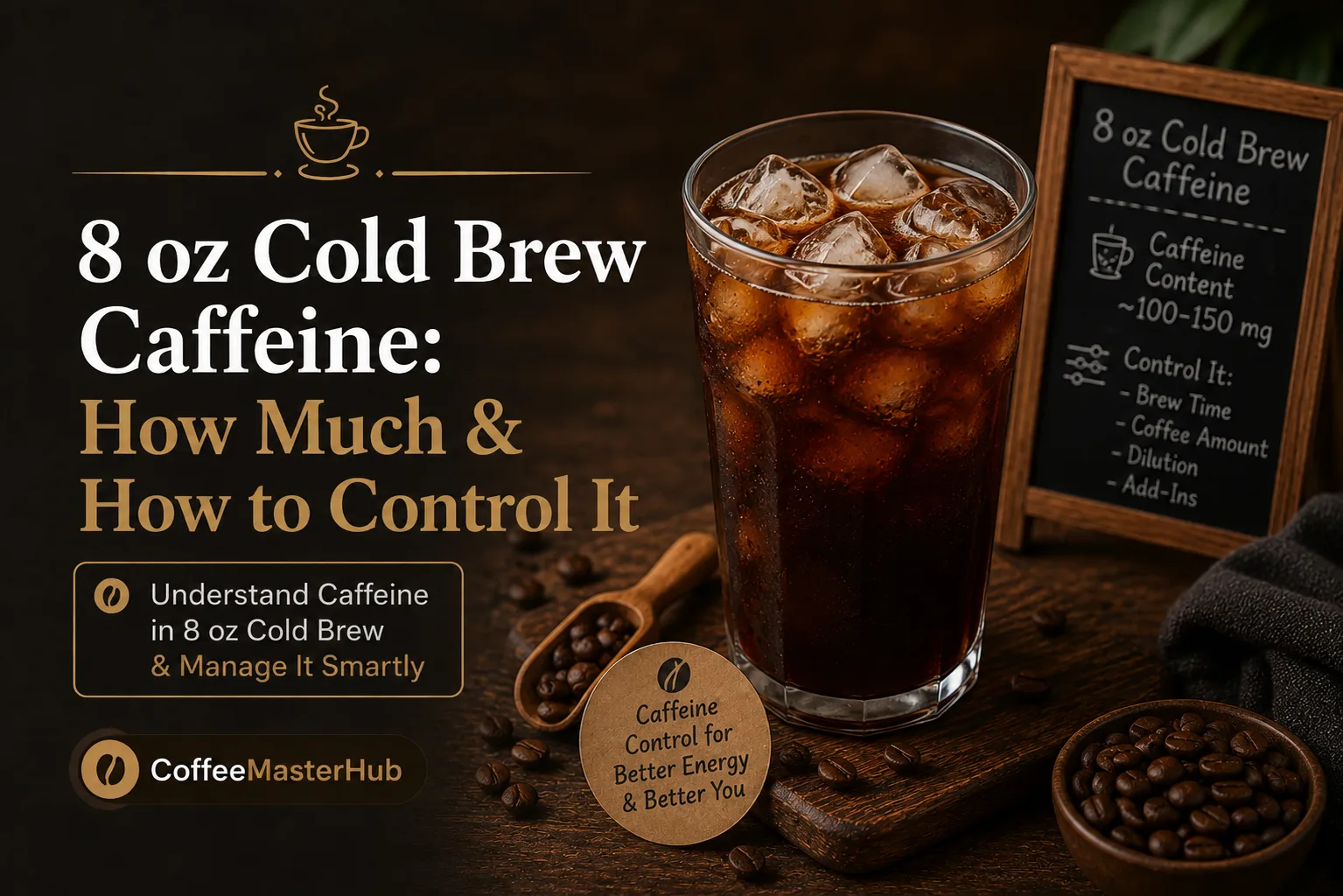
An 8 oz cup of cold brew coffee typically contains between 150-240 mg of caffeine, though the exact amount depends on the strength and brewing method. This is roughly 2-3 times more caffeine than standard hot coffee of the same size. The variation comes from brew ratios, steeping duration, and bean selection.
Understanding Your Cold Brew Caffeine Content
Cold brew is concentrated because of how it’s made. Hot water extracts caffeine quickly, but cold water takes much longer—usually 12-24 hours. This extended steeping time pulls out significant amounts of caffeine and other compounds from the beans.
The most important factor is the coffee-to-water ratio. If you use a 1:4 ratio (one part coffee to four parts water), your 8 oz serving will contain more caffeine than a 1:6 ratio.
Why 8 oz of Cold Brew Has So Much Caffeine
Cold brew extraction works differently than hot brewing. The slow process doesn’t use temperature to speed up extraction, but the extended contact time more than makes up for it.
Many people don’t realize that cold brew is rarely consumed at full strength. A typical 8 oz cup often contains 2-4 oz of concentrated cold brew, with the rest being water or milk. This dilution reduces the final caffeine content but still keeps it high compared to regular coffee.
Temperature also plays a role. Cold water doesn’t break down chlorogenic acid the same way hot water does, which affects the final flavor and caffeine availability.
Cold Brew vs. Other Coffee Drinks: Caffeine Comparison
| Drink Type | Serving Size | Caffeine (mg) | Strength |
|---|---|---|---|
| 8 oz Cold Brew (Full Strength) | 8 oz | 150-240 | Very High |
| 8 oz Iced Coffee | 8 oz | 95-140 | Moderate |
| 8 oz Hot Brewed Coffee | 8 oz | 80-100 | Moderate |
| Espresso Shot (1 oz) | 1 oz | 75-100 | High per oz |
| 8 oz Coffee with Milk | 8 oz | 70-90 | Lower |
| 8 oz Cold Brew Diluted (50%) | 8 oz | 75-120 | Moderate-High |
Cold brew stands out because it maintains high caffeine content even when served cold, without the bitterness that hot extraction can sometimes create.
Factors That Affect Caffeine Content in Your 8 oz Cup
Coffee Bean Type
Different bean varieties contain different natural caffeine levels. Robusta beans have roughly twice the caffeine of Arabica beans. Most specialty cold brew uses Arabica, but checking the label helps.
Dark roasts and light roasts contain similar caffeine amounts, contrary to common belief. The roasting process doesn’t significantly reduce caffeine.
Brew Strength and Ratio
Home brewers control caffeine content through their coffee-to-water ratio. A 1:4 ratio creates stronger cold brew than 1:8.
Steeping time also matters. Longer steeps (20+ hours) extract more caffeine than shorter ones (12 hours), though the difference is modest after 16 hours.
Water Quality and Temperature
Cold water extracts caffeine more slowly but thoroughly. Room temperature water extracts faster than refrigerated water. Some people use cool (not cold) water for slightly faster extraction.
Serving Method
Concentrate served straight has maximum caffeine. Diluted with water, milk, or cream reduces the final amount you consume.
How to Control Caffeine in Your 8 oz Cold Brew
Here are practical ways to adjust caffeine content to match your preferences:
- Use a measured ratio — Use 1 part coffee to 5-6 parts water for moderate strength, or 1:4 for very strong brew
- Control steep time — Brew for 12-16 hours for standard strength, 18-24 hours for maximum extraction
- Choose your beans — Select Robusta if you want higher caffeine, Arabica for lower levels
- Dilute strategically — Mix concentrate 1:1 with water for moderate caffeine, or 1:2 for lighter servings
- Add milk or cream — This doesn’t reduce caffeine but adds volume and can change how you perceive strength
- Adjust serving size — Pour less concentrate and more liquid for lower overall caffeine intake
Common Misconceptions About Cold Brew Caffeine
“Cold brew has less caffeine because it’s not hot”
Actually, the opposite is closer to true. The long steeping time extracts substantial amounts of caffeine. The lack of heat means some compounds extract differently, but caffeine content is high.
“All 8 oz cups are the same”
Concentration, bean choice, and brewing method create real variation. One brand’s 8 oz might contain 180 mg while another contains 220 mg.
“You can reduce caffeine by brewing shorter”
Brewing for only 6-8 hours does reduce caffeine somewhat, but most extraction happens early. Significant reduction requires much shorter steeping times.
“Dark roast has more caffeine than light roast”
This is false. Caffeine levels are similar regardless of roast level. The difference in perceived strength comes from flavor, not caffeine content.
Is 8 oz of Cold Brew Too Much Caffeine?
The FDA recommends a maximum of 400 mg of caffeine daily for healthy adults. An 8 oz cup of cold brew provides roughly one-third to two-thirds of this limit.
For most people, one cup is fine. Two cups daily approaches the recommended maximum, so monitoring total intake from other sources matters.
Sensitivity varies widely. Some people feel jittery at 200 mg, while others tolerate 400+ mg comfortably. Sleep timing also matters—consuming high-caffeine beverages after 2 pm can disrupt sleep for many people.
Certain groups should be more cautious. Pregnant women, those with anxiety disorders, and people sensitive to stimulants should consume less cold brew or dilute it further.
Tips for Getting the Most From Your 8 oz Cold Brew
- Brew at home to control exact caffeine levels and save money
- Store properly in the refrigerator to maintain freshness and prevent oxidation
- Label your batches if you brew different strengths
- Use filtered water to improve taste without affecting caffeine
- Experiment with ratios to find your preferred balance of strength and flavor
- Consume earlier in the day if caffeine sensitivity affects your sleep
- Add ice gradually to prevent over-dilution as ice melts
Cold Brew Brewing Equipment You’ll Need
Making quality cold brew at home requires minimal equipment. A mason jar works perfectly for beginners. A fine-mesh strainer or cheesecloth helps separate grounds from liquid.
For larger batches, specialized cold brew makers offer convenience. These typically cost $20-50 and make the filtering process faster and cleaner.
A coffee grinder helps if you’re buying whole beans, though most coffee shops can grind beans for cold brew. You’ll want a medium-to-coarse grind, similar to French press consistency.
Storage and Shelf Life Considerations
Properly stored cold brew concentrate lasts 2-3 weeks in the refrigerator. The cold temperature slows oxidation and keeps the concentrate fresh.
Never leave brewed cold brew at room temperature for more than 2-4 hours. Bacteria can grow quickly, making it unsafe to drink.
Pre-made 8 oz servings should be consumed within 24-48 hours of opening. Once exposed to air, oxidation begins degrading the quality.
Conclusion
An 8 oz cup of cold brew coffee contains 150-240 mg of caffeine, making it one of the strongest coffee options available. This high caffeine content comes from the extended cold-steeping process, which extracts substantial amounts over 12-24 hours. The exact amount depends on your brewing ratio, bean type, and how much concentrate versus water you use.
Understanding these variables lets you control your caffeine intake precisely. Whether you prefer maximum strength or a gentler option, adjusting your brew method achieves the results you want. Most healthy adults can safely enjoy a single 8 oz serving, but monitoring total daily caffeine intake across all beverages remains important.
About the Author
Muhammad Hammad Abbas started Coffee Master Hub, where he shares useful coffee guides and brewing tips based on his own research and experience. He works to make coffee knowledge easier to understand and tries out different methods to help readers make better coffee at home.
Frequently Asked Questions
An 8 oz cup of cold brew contains roughly 150-240 mg of caffeine, while a single espresso shot (1 oz) contains 75-100 mg. Cold brew has significantly more total caffeine, but espresso has more per ounce.
Yes. Brew for shorter periods (8-12 hours instead of 16+), use more water relative to coffee, or dilute the finished concentrate with more water or milk.
Generally yes. The 12-24 hour steeping extracts more caffeine than hot brewing methods. A comparable 8 oz cup of hot coffee typically contains 80-100 mg versus cold brew’s 150-240 mg.