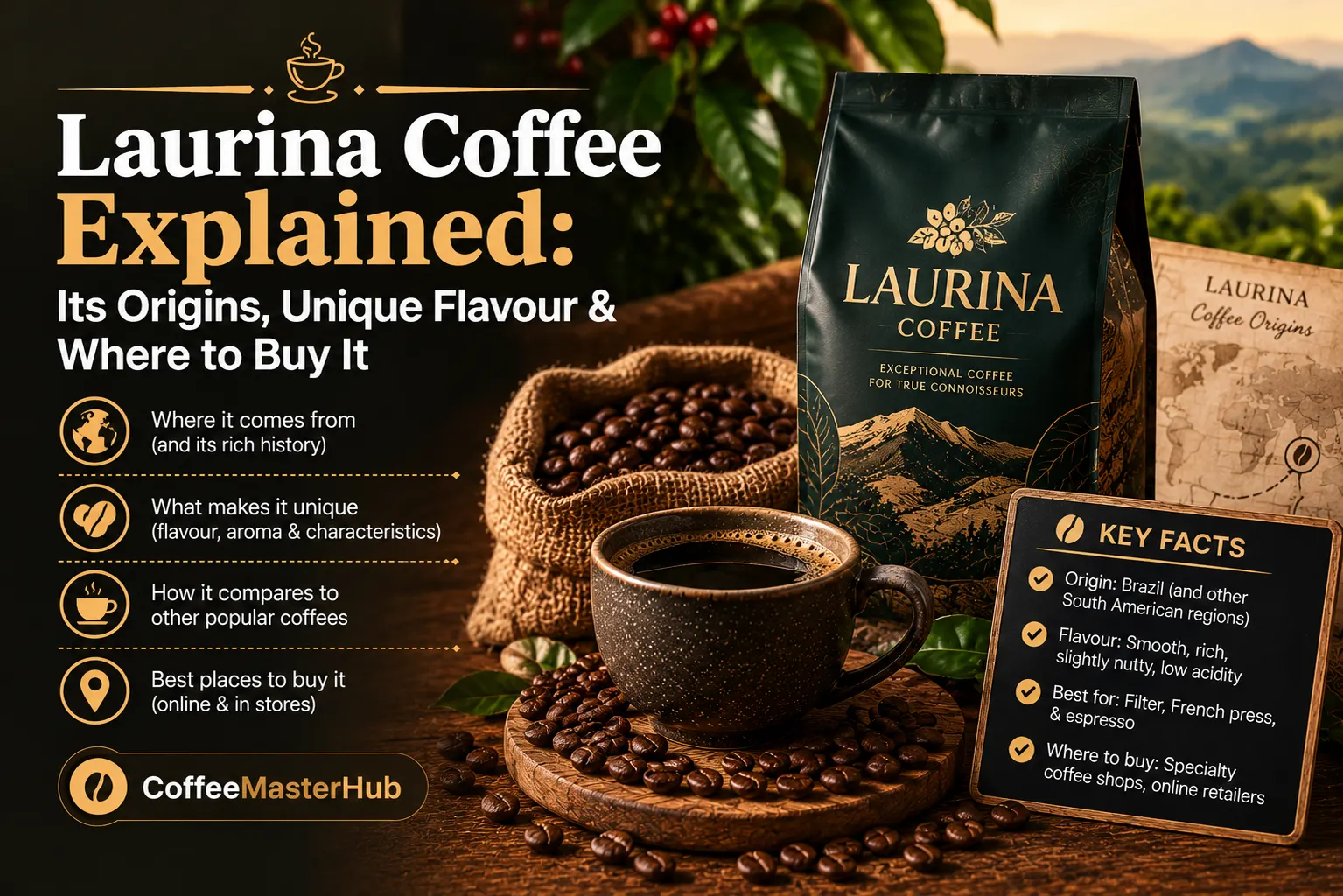
Laurina coffee is a rare Arabica variety that is naturally low in caffeine. It began as a Bourbon mutation on Réunion Island and tastes sweet, floral and delicate. Buy a small bag of light roast from a specialty roaster and check the roast date.
If you have spotted Laurina on a specialty menu or roaster website, you may wonder what sets it apart. This guide covers where it came from, why it has less caffeine, how it tastes, how to brew it and where to buy it.
What Makes Laurina Coffee Different?
Laurina is a variety of Arabica, the species behind most specialty coffee. What makes it unusual is its natural genetics, not any processing trick or special treatment.
The plant is small and cone shaped. Its beans are slim and pointed rather than rounded, which is why you will often see it sold as Bourbon Pointu.
Because the beans look different, they roast differently too. Roasters often handle them with extra care, since they are smaller and can heat quickly.
Laurina Coffee Origins: The Story of Bourbon Pointu
Laurina is a natural mutation of the Bourbon variety. It is linked to Réunion Island in the Indian Ocean, which was once called Bourbon Island. Plants of this type were noticed there in the 1700s.
The mutation was not created in a lab. A Bourbon plant simply developed different traits, and growers recognised that the pointed beans tasted unusual.
Today, Laurina remains a small player. Most is grown in small lots, and a few producers in other coffee countries also grow it. Availability changes from year to year.
Why Laurina Is a Low Caffeine Coffee
The main reason people look for Laurina is its caffeine. It contains roughly half the caffeine of a typical Arabica bean.
That does not make it decaf. It is not treated with solvents or water, and nothing is removed after harvest. The low caffeine is simply part of the plant.
Who might enjoy it:
- People who like coffee but feel jittery after a strong cup
- Afternoon drinkers who want a gentler lift
- Anyone curious about rare varieties
Caffeine levels vary by farm, harvest and brewing method, so treat the “half” figure as a guide, not a guarantee.
Laurina Coffee Flavour: What Does It Taste Like?
Expect a soft, sweet and delicate cup. Many people describe notes of flowers, honey, light fruit and tea. Acidity is usually gentle, and bitterness is low.
Laurina is not a heavy, smoky coffee. If you enjoy dark roast and big body, it may taste quiet to you.
| Feature | Laurina | Typical Arabica |
|---|---|---|
| Caffeine | Roughly half | Standard |
| Bean shape | Slim and pointed | Rounder |
| Flavour | Sweet, floral, tea like | Varies widely |
| Body | Light to medium | Light to full |
| Bitterness | Low | Varies with roast |
| Price | Often higher | Wide range |
Roast level changes the result. A light to medium roast keeps the floral sweetness, while a dark roast can hide what makes Laurina special.
Why Laurina Coffee Beans Are Rare and Expensive
Laurina is harder to grow than many mainstream varieties. The plants tend to produce less coffee, so supply is limited.
Other factors affect price:
- Small harvests from small farms
- Lower yields per plant
- Extra care needed during roasting
- Limited demand compared with common varieties
- Shipping and import costs for small lots
Do not assume a high price guarantees quality. Check the roaster’s tasting notes and roast date before paying extra.
Where to Buy Laurina Coffee
Supermarkets rarely stock it. Your best bet is an independent specialty roaster, either in a local shop or online.
Search for “Laurina” or “Bourbon Pointu”, and check whether the roaster currently has a lot in stock. Stock is often seasonal and sells out.
Use this checklist when buying:
- A clear roast date, ideally within the last few weeks
- Whole beans rather than ground coffee
- Variety listed as Laurina or Bourbon Pointu
- Origin and producer details on the bag or page
- A light to medium roast for the most flavour
- A small bag size, such as 100g to 250g, because it is pricey
Ask the roaster if you are unsure. Good ones are usually glad to explain what is in the bag.
How to Brew Laurina Coffee
Delicate coffee suits gentle methods like pour over, AeroPress or a clean filter machine. These highlight the floral notes. Here is a simple pour over starting point:
- Weigh the coffee. Use about 15g of whole beans.
- Grind medium. Aim for a texture like table salt, a little finer than coarse sand.
- Heat the water. Use about 92 to 94°C, a little under a full boil.
- Bloom the grounds. Pour about 30g of water over the coffee and wait 30 seconds.
- Pour the rest. Add water in slow circles until you reach about 250ml.
- Taste and adjust. A total brew time of around 3 minutes is a good start.
Adjust one thing at a time so you know what changed the flavour.
Common Mistakes When Buying and Brewing Laurina
| Problem | Likely cause | Fix |
|---|---|---|
| Tastes flat | Old beans or dark roast | Buy fresh, lighter roasted beans |
| Sour and thin | Grind too coarse or water too cool | Grind a little finer and use hotter water |
| Bitter | Water too hot or brew too long | Lower the temperature and shorten the brew |
| Weak taste | Too little coffee | Increase the dose slightly |
| Disappointing value | Paid for the name only | Check roast date, origin and tasting notes |
Also avoid buying a large bag. Laurina is at its best fresh, so smaller purchases protect both flavour and budget.
Conclusion
Laurina coffee explained in short: it is a rare Bourbon mutation from Réunion Island, naturally lower in caffeine, with a sweet, floral and delicate cup. Its pointed beans, small yields and limited supply explain why it costs more.
Look for fresh whole beans from a specialty roaster and choose a light to medium roast. Brew gently with a pour over or AeroPress.
If you want to try something different from your usual coffee, a small bag of Laurina is a low risk way to explore.
Frequently Asked Questions
Is Laurina coffee decaf?
No. Laurina is naturally low in caffeine, but it is not decaffeinated. Nothing is removed from the bean after harvest. It generally contains roughly half the caffeine of typical Arabica, though the amount varies, so it is not suitable if you must avoid caffeine entirely.
What does Laurina coffee taste like?
Most people describe it as sweet, floral and tea like, with soft acidity and low bitterness. Notes of honey and light fruit are common. The cup is delicate rather than bold, so lighter roasts and gentle brewing methods show it off best.
Why is Laurina coffee so expensive?
Laurina plants produce less coffee than many common varieties, and harvests are small. The beans also need careful roasting, and demand is limited. These factors raise the price, so check the roast date and tasting notes before buying.