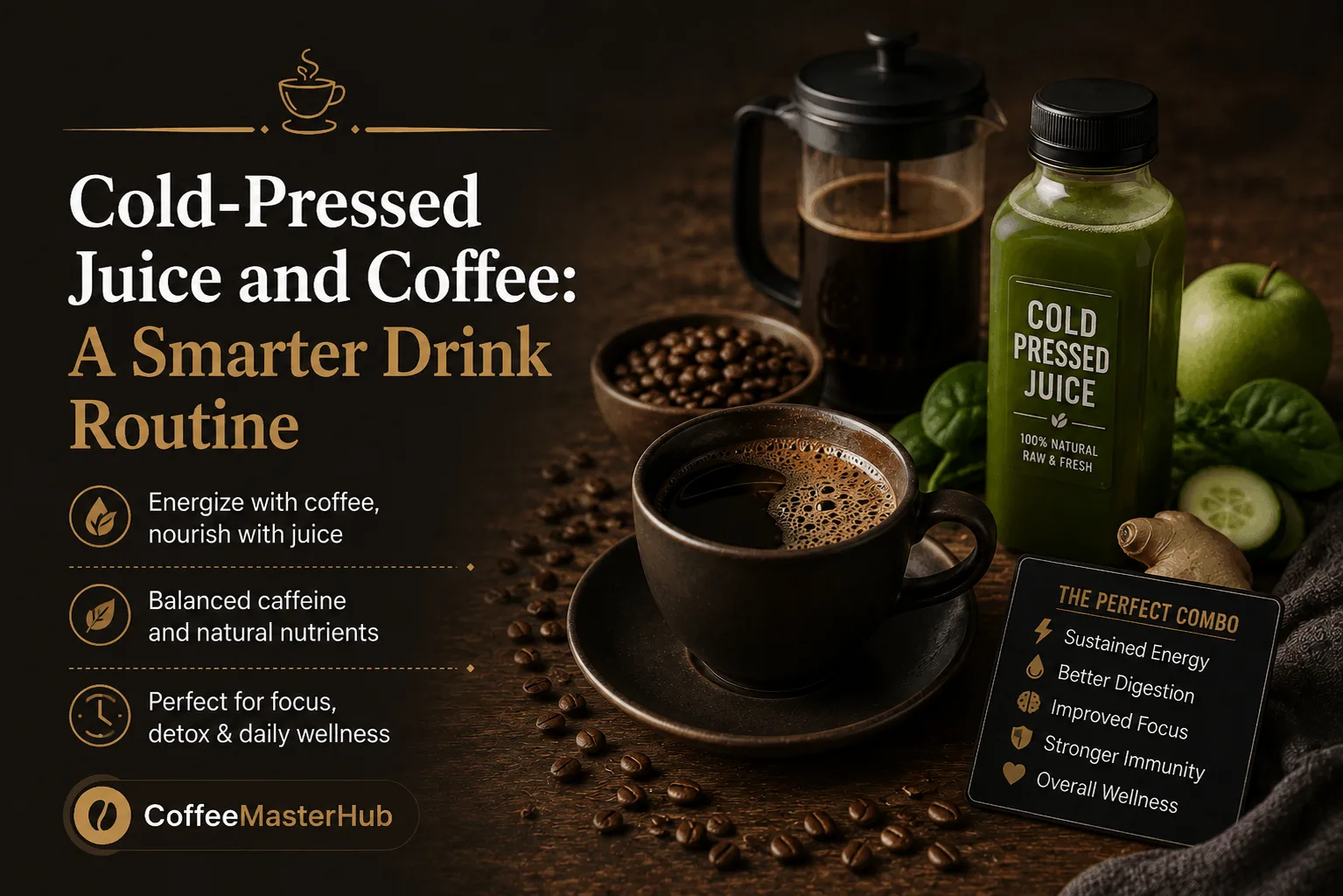
For many people, coffee is non-negotiable in the morning. It is familiar, comforting, and often the first drink we reach for when we need to feel awake. But what about the rest of the day?
Coffee does not have to be your only option. As people become more interested in what goes into their everyday drinks, cold-pressed juice has found a natural place alongside coffee, tea and other café favorites.
That does not mean swapping your morning brew for green juice. Instead, it is about understanding what different drinks offer and choosing them according to the time of day, your preferences and your routine.
For coffee lovers looking to add more variety to their beverage choices, here is where cold-pressed juice can fit in.
Coffee or Cold-Pressed Juice? It Doesn’t Have to Be Either-Or
Coffee and juice serve very different purposes, which is exactly why they can coexist in the same routine.
Coffee contains caffeine and is commonly chosen for alertness, focus and, of course, flavor. Cold-pressed juice, meanwhile, is produced by crushing fruits and vegetables and using pressure to extract their liquid without relying on the fast-spinning blades used by centrifugal juicers.
The result is a convenient way to enjoy flavors from ingredients such as oranges, apples, carrots, beets, ginger and leafy greens.
Think about how your drink choices change throughout the day. You might want a strong coffee first thing in the morning but something cold and refreshing with lunch. In the afternoon, another coffee may sound good, but you might not necessarily want more caffeine.
Cold-pressed juice gives you another option without trying to replace the coffee you enjoy.
When You Want a Break From Caffeine
There is nothing inherently wrong with enjoying caffeine, but timing and quantity matter.
For most healthy adults, the U.S. Food and Drug Administration cites 400 milligrams of caffeine per day as an amount not generally associated with negative effects, although sensitivity varies considerably between individuals.
Coffee Master Hub regularly explores this exact issue, covering everything from caffeine levels in different brewing methods to how long caffeine can remain in the body.
This becomes particularly relevant later in the day. If you have already enjoyed a couple of coffees, reaching automatically for another one may not always be what you want.
A fruit and vegetable juice can provide a flavorful, caffeine-free alternative.
For example:
- Choose a citrus-based juice when you want something bright and refreshing.
- Try a ginger-forward blend if you prefer stronger, sharper flavors.
- Look for beet or carrot blends for something earthier.
- Pick vegetable-forward combinations when you want something less sweet.
It is similar to exploring different coffee roasts or brewing methods. You are not abandoning your favorite drink; you are simply expanding your options.
What Coffee and Cold-Pressed Juice Have in Common
At first glance, espresso and cold-pressed juice may seem worlds apart. Look a little closer, however, and there is an interesting similarity: the process matters.
Coffee drinkers already understand this.
Change the bean, grind size, water temperature, brew ratio or extraction time, and you can end up with a completely different cup. Coffee Master Hub’s guides frequently focus on how brewing techniques and ingredients affect caffeine, flavor and the finished drink.
Juice has its own version of this.
Cold pressing uses pressure to extract liquid from produce rather than rapidly spinning blades. However, seeing “cold pressed” on the front of a bottle does not tell you everything about what is inside.
Just as you might check the roast or ingredients in a bottled cold brew, it is worth turning a juice bottle around and reading its label.
Pay attention to:
- The fruits and vegetables used
- Whether sweeteners have been added
- Serving size
- Sugar content
- Storage instructions
- Any additional ingredients
This is particularly important because fruit naturally contains sugar, while juicing removes much of the fiber present in whole fruits and vegetables.
In other words, the production method matters, but so does everything else in the bottle.
Building a More Varied Daily Drink Routine
Your beverage routine does not need to revolve around finding one “perfect” drink.
A better approach is to consider what makes sense at different points in your day.
Your morning might begin with freshly brewed coffee. Water can remain your primary source of hydration throughout the day. A bottle of cold-pressed juice could accompany breakfast or lunch, while decaf coffee or tea might be a better fit in the evening.
The same principle applies when visiting a café. Sometimes you want an espresso. Other times you want something cool, fruity or caffeine-free.
The key is variety rather than replacement.
It is also important not to treat juice as a substitute for eating fruits and vegetables. Most of the insoluble fiber found in whole produce is removed during juicing, so whole foods should continue to form an important part of your diet.
Instead, consider cold-pressed juice a convenient beverage option that can complement what you already eat and drink.
Choosing a Cold-Pressed Juice Like You Choose Coffee
Coffee lovers can be selective. You might care about the origin of your beans, roast level, brewing method or whether anything has been added to a ready-to-drink coffee.
Apply that same curiosity to juice.
Start with the ingredient list. Look for recognizable fruits and vegetables and consider whether the combination suits your preferences.
If you normally avoid very sweet coffee drinks, for example, you may also prefer a vegetable-forward juice rather than one dominated by sweeter fruits.
Brands such as Wonder Juice offer cold-pressed juice options that make it easier to explore different fruit and vegetable combinations without preparing and juicing everything yourself.
Ultimately, choosing a drink should not be complicated. Read the label, understand what you are buying and pick something you genuinely enjoy.
Give Your Coffee Routine a Little More Variety
Being a coffee lover does not mean every drink has to contain coffee.
Understanding extraction, ingredients and preparation already comes naturally to people who care about a good cup of coffee. Applying that same thinking to cold-pressed juice can help you make more informed choices when you want something different.
Enjoy your morning coffee. Learn what goes into it. Experiment with brewing methods. But when the afternoon arrives and another espresso is not calling your name, a cold fruit and vegetable juice can offer a refreshing change of pace.
A good beverage routine is not about choosing sides. It is about having better options.
About the Author
Muhammad Hammad Abbas started Coffee Master Hub, where he shares useful coffee guides and brewing tips based on his own research and experience. He works to make coffee knowledge easier to understand and tries out different methods to help readers make better coffee at home.
Frequently Asked Questions
Can I drink coffee and cold-pressed juice on the same day?
Yes. There is no general reason you need to choose one or the other. They are different beverages and can fit into your day according to your diet, caffeine intake and personal preferences.
Is cold-pressed juice a good replacement for afternoon coffee?
It can be an option if you want a flavorful drink without additional caffeine. However, juice does not provide the same caffeine-related effects as coffee, so it should not be considered a direct substitute for coffee’s stimulant effect.
Is cold-pressed juice better than bottled coffee?
They serve different purposes, so “better” depends on what you are looking for. Check the ingredients and nutrition information of either beverage rather than assuming one category is automatically healthier.