Quick Answer:
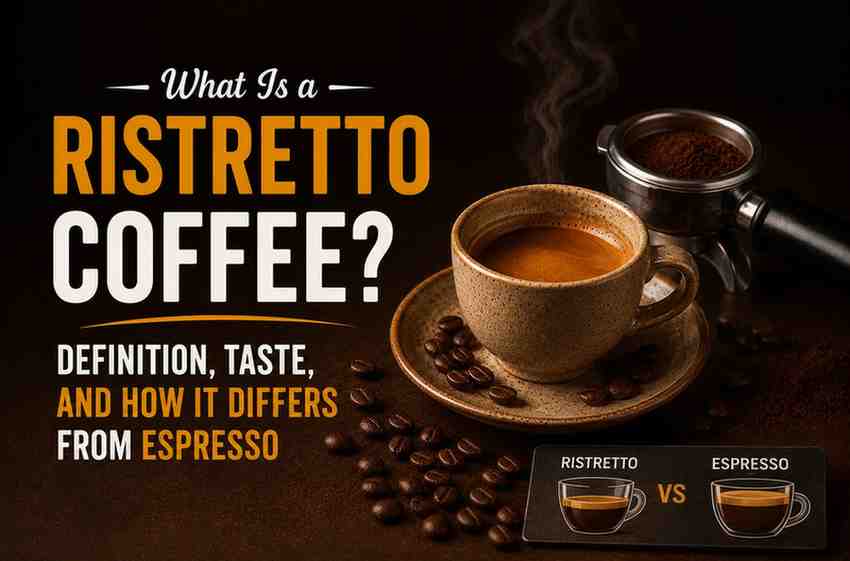
A ristretto coffee is a short, concentrated espresso shot made by pulling an espresso but stopping the extraction early. It contains less water than a regular espresso shot but uses the same amount of coffee grounds, creating a smaller volume of intensely concentrated flavor. Most ristrettos are about 0.75 to 1 ounce and pack a powerful punch.
Introduction
If you’ve spent any time in a specialty coffee shop, you’ve probably heard the term ristretto thrown around. It’s one of those coffee words that sounds fancy but actually refers to something quite straightforward. The name comes from Italian and literally means “restricted” or “limited”—which perfectly describes what this drink is.
The concept is simple, but understanding it opens up a whole new dimension of espresso-based coffee. Whether you’re a casual coffee drinker curious about what your barista is doing or someone exploring different coffee preparations, this guide covers everything you need to know about ristretto coffee.
The Basic Definition
At its core, a ristretto coffee is simply an espresso shot that’s been cut short. Instead of letting the espresso machine run for the full time needed to extract a complete shot, you stop it early and pull out less liquid. You’re using the exact same amount of ground coffee, but you’re stopping before all the water has passed through it. Think of it this way: imagine you’re making tea and you steep it for just a few seconds instead of three minutes.
The liquid would be much less, but the flavor would be incredibly concentrated. That’s essentially what happens with ristretto. A standard espresso shot usually produces about 1 to 2 ounces of liquid and takes around 25 to 30 seconds to pull. A ristretto shot might only produce 0.75 to 1 ounce and comes out in about 15 to 20 seconds. That difference in timing makes a noticeable difference in what you end up with in your cup.
How It Differs from Espresso and Lungo
Understanding ristretto means understanding how it sits within the espresso family. There are essentially three main ways to pull an espresso shot, and they’re distinguished by how much water passes through the coffee grounds. A standard espresso shot is the middle ground. You pull the shot until you have a full ounce or two of liquid, usually taking about 25 to 30 seconds. This gives you a balanced extraction where you get both the sweet and bold flavors from the beans. A ristretto shot is shorter and more concentrated. Less water means less extraction time, so you’re pulling out the first, most intense flavors from the coffee. The shot is smaller but punchier.
A lungo shot is the opposite. It’s a longer pull where you let more water run through the grounds, producing maybe 3 to 4 ounces of liquid. This dilutes the espresso more, creating something with less intensity but more body. It’s closer to an Americano but slightly different. The key thing to remember is that all three use the same amount of ground coffee. The only variable is how much water you let pass through and how long you let it run.
The Flavor Profile
This is where ristretto gets interesting. Because you’re stopping the extraction early, you’re primarily capturing the first flavors that come out of the coffee. These tend to be bold, sweet, and intense. You’re getting the oils and compounds that extract quickly, but you’re avoiding some of the more bitter compounds that come out during a longer extraction.
Most people describe ristretto as tasting heavier and more concentrated than regular espresso. The sweetness is often more pronounced because you’re hitting that sweet spot of extraction without going too far. Some coffees can taste almost syrupy in ristretto form, especially if they have naturally sweet flavor notes.
The downside is that ristretto can sometimes taste a bit incomplete if the extraction is too short. You might get intensity without the complexity that comes from a full extraction. It’s a balance that takes some practice to get right.
How Baristas Make It
Making a ristretto is straightforward for anyone who knows how to pull espresso. The barista starts with their normal amount of ground coffee, typically 18 to 20 grams for a double shot. They tamp it down and insert it into the machine just like normal. When the espresso starts flowing, they watch the output carefully. Instead of waiting for the full 25 to 30 seconds, they stop the shot much earlier, usually around 15 to 20 seconds. The timing depends on the machine, the beans, and personal preference, but the visual cue is usually when you have about 0.75 to 1 ounce in the cup.
Some baristas use weight to measure it instead of time. They’ll pull the shot until the output reaches a specific gram measurement, then stop. This is actually more precise than relying on timing alone. The tricky part is that different espresso machines and different coffee beans require slightly different timing. A barista who knows their machine well can pull perfect ristrettos consistently. Someone new to espresso might find it harder to nail the timing exactly right.
Why Anyone Would Order This
You might wonder why someone would order less coffee instead of more. The answer comes down to intensity and personal preference. Some people simply prefer concentrated shots. They love the bold, intense flavor and don’t want anything diluted. If you’re someone who finds regular espresso too mild, a ristretto might be exactly what you’re looking for.
Others use ristretto as a base for mixed drinks. If you’re making a cortado or a macchiato, a ristretto might give you exactly the flavor strength you want. It’s particularly popular in Scandinavian coffee culture, where concentrated, bold shots are the norm. There’s also a practical side. If you’re ordering from a cafe where the espresso is particularly good, a ristretto lets you experience the quality of those beans in their most concentrated form. You’re getting a purer representation of the coffee’s character.
Common Misconceptions
People sometimes confuse ristretto with other coffee drinks, so let’s clear things up. A ristretto is not an Americano. An Americano is espresso that’s been diluted with hot water, making it longer and milder. A ristretto is the opposite—it’s concentrated espresso with nothing added. Another confusion is thinking ristretto means stronger coffee. While it’s true that ristretto is more concentrated, it doesn’t necessarily mean it has more caffeine. Since you’re using the same amount of coffee grounds and only changing the extraction time, the caffeine content doesn’t increase that much.
You’re getting more intensity in less volume, but the actual caffeine might be slightly lower because you’re not extracting as completely. Some people also think ristretto is difficult to make or requires special equipment. In reality, if you can make regular espresso, you can make ristretto. It’s just a matter of stopping earlier.
When to Try a Ristretto
If you’ve never had one, there are a few situations where it’s worth trying. Visit a specialty coffee shop that focuses on single origin coffees, and ask for a ristretto of whatever they’re featuring. This lets you taste the coffee in its most concentrated form and really appreciate the flavor notes that the roaster was highlighting.
You might also try a ristretto if you enjoy strong coffee but want something different from what you normally drink. It’s a way to experience familiar coffee in a new way. The same beans you drink as a regular cup might surprise you when concentrated into a ristretto shot.
Conclusion
A ristretto coffee is simply an espresso shot that’s been pulled for a shorter time, creating a smaller volume of more concentrated coffee. It sits between regular espresso and lungo shots in terms of extraction time and volume. The flavor tends to be bold, sweet, and intense because you’re capturing the first, most soluble compounds from the coffee grounds.
Understanding ristretto expands your appreciation for how flexible espresso can be. It’s not just about what you put in the cup—it’s also about how you extract it. Whether you prefer ristretto, regular espresso, or lungo shots comes down to personal taste, and that’s what makes specialty coffee so interesting.
About the Author
Muhammad Hammad Abbas started Coffee Master Hub, where he shares useful coffee guides and brewing tips based on his own research and experience. He works to make coffee knowledge easier to understand and tries out different methods to help readers make better coffee at home.
Frequently Asked Questions
Not significantly. Ristretto uses the same amount of ground coffee as espresso but stops extraction early. The caffeine content is actually slightly lower because less total extraction happens. You get more intense flavor in less volume, but not necessarily more caffeine.
Ristretto tastes bolder and more concentrated than standard espresso. It emphasizes the sweet, initial flavors that extract quickly while minimizing the bitter compounds that develop during longer extraction. Most people find it more intense but sometimes less complex.
Yes. Any espresso machine that lets you control extraction time can make ristretto. Simply pull a regular shot but stop it after 15 to 20 seconds instead of letting it run the full 25 to 30 seconds. The timing might vary depending on your machine and beans.
Ristretto is a short, concentrated shot made by stopping extraction early. Lungo is a long shot made by letting extraction continue longer, producing more liquid. Both use the same ground coffee, but ristretto has less water passing through while lungo has more.