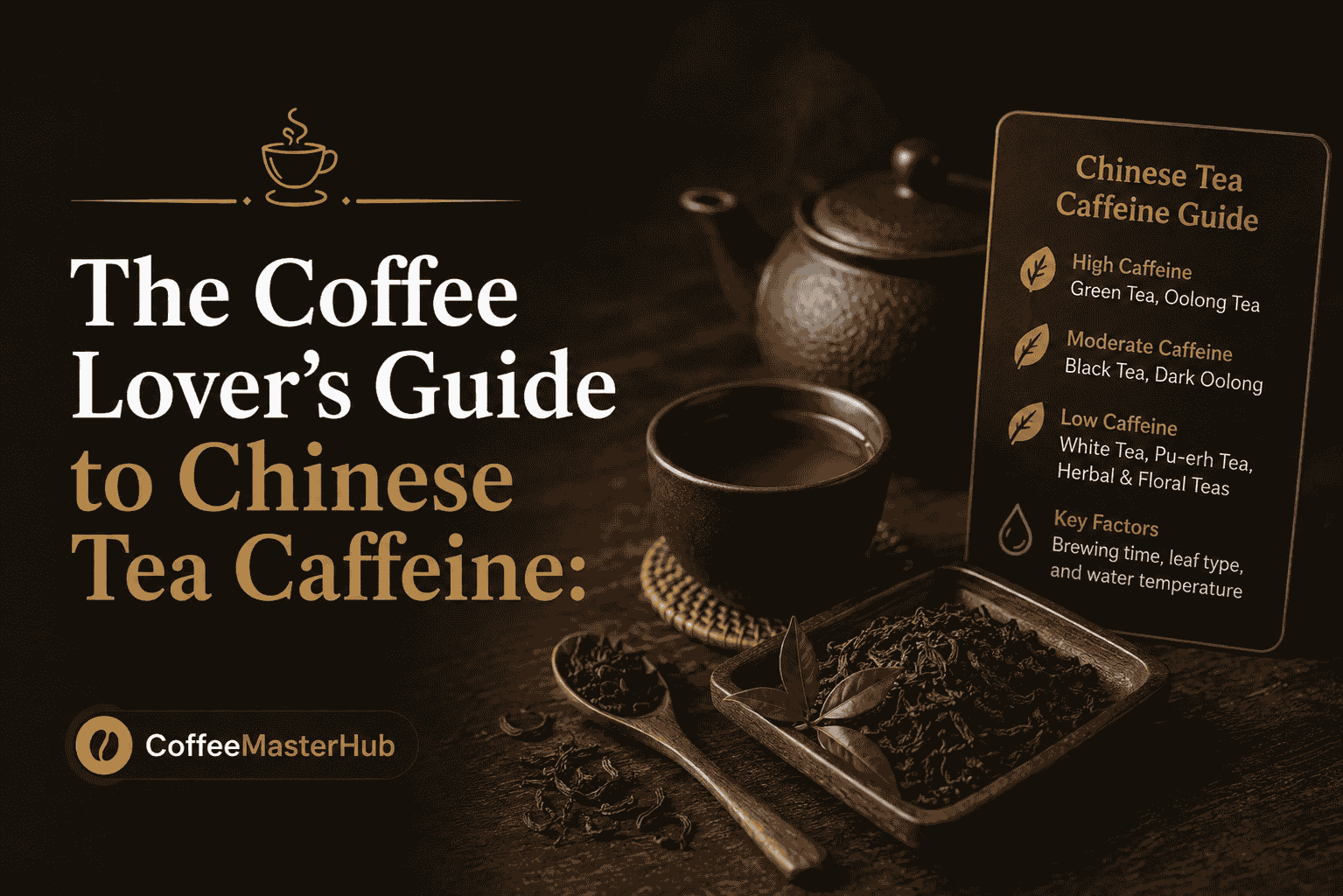
If you love specialty coffee, you probably care about how your daily brew delivers its energy. When exploring traditional loose-leaf teas, many assume tea is nearly caffeine-free or that green tea has zero kick. In reality, understanding tea caffeine involves leaf chemistry, processing, and brewing variables—just like dialing in a pour-over.
1. The Core Misconception: Does “Green” Mean Less Caffeine?
In coffee, roast level doesn’t dictate caffeine content. A similar rule applies to tea. People often assume delicate green teas have little caffeine, while dark or roasted teas pack a massive punch.
In nature, caffeine is a plant defense mechanism against pests, concentrating most heavily in the youngest, tenderest shoots and buds. Whether those leaves become an unoxidized green tea or a fully oxidized black tea, their baseline potential starts right in the field. Exploring authentic selections from Dofo Tea’s Chinese Tea reveals how different regional terroirs and traditional processing methods naturally shape these profiles.
2. Quick Caffeine Comparison: Coffee vs. Traditional Teas
To help you choose the right loose-leaf tea for your daily routine, here is how different beverages compare per standard serving:
| Beverage | Serving | Caffeine | Energy Style |
|---|---|---|---|
| Drip Coffee | 8 oz | 95 mg | Rapid peak |
| Espresso | 1 oz | 63 mg | Fast jolt |
| Black Tea | 8 oz | 40–70 mg | Bold, rich |
| Oolong Tea | 8 oz | 35–50 mg | Balanced |
| Green Tea | 8 oz | 30–50 mg | Crisp, fresh |
| White Tea | 8 oz | 25–40 mg | Light, subtle |
(Note: High-elevation oolongs like Dancong Tea sit right in that sweet spot for a smooth, jitter-free afternoon lift.)
3. The Brewing Factor: Why Your Technique Matters
Just as changing your grind size or extraction time alters espresso strength, how you steep loose-leaf tea changes its caffeine extraction:
- Water Temperature: Hotter water extracts compounds faster. Near-boiling water releases caffeine much quicker than sub-boiling water.
- Steeping Time: In specialty coffee, over-extraction causes bitterness. Traditional loose-leaf brewing uses high leaf-to-water ratios with ultra-fast steepings—often just 3 to 5 seconds—across multiple infusions.
- The Multi-Steep Effect: Because leaves are re-steeped rather than discarded, total caffeine distributes across several smaller cups, preventing a sudden influx and providing a smoother lift.
Coffee, Tea, and the Art of Balance
Finding Your Balance Between Coffee and Tea At the end of the day, moving between specialty coffee and fine loose-leaf tea is all about control and intention. By mastering water temperature, leaf ratios, and fast extraction times, you can fine-tune your daily caffeine intake, avoid jitters, and discover an entirely new spectrum of flavors in your cup.
Frequently Asked Questions
Does dry tea have more caffeine than coffee beans?
Yes. Dry tea leaves contain more caffeine by dry weight (3% to 4%) than green coffee beans (1% to 2%). However, because you use a much smaller dry weight of tea leaves per cup, brewed tea delivers about one-third to one-half the caffeine of drip coffee.
Can I reduce tea caffeine by “rinsing” the leaves?
A popular myth suggests a quick hot water rinse washes away most caffeine. In reality, scientific tests show a significant portion extracts rapidly within the first few seconds. A quick rinse primarily washes away fine dust and “wakes up” the leaves, rather than decaffeinating them.
Why does high-quality loose tea feel smoother than cheap tea bags?
Whole-leaf teas contain complex amino acids like L-theanine alongside caffeine. L-theanine promotes relaxation, crosses the blood-brain barrier, and smooths out caffeine absorption, preventing the sudden “jolt and crash” common with low-grade fannings.
About the Author
Muhammad Hammad Abbas started Coffee Master Hub, where he shares useful coffee guides and brewing tips based on his own research and experience. He works to make coffee knowledge easier to understand and tries out different methods to help readers make better coffee at home.