Quick Answer:
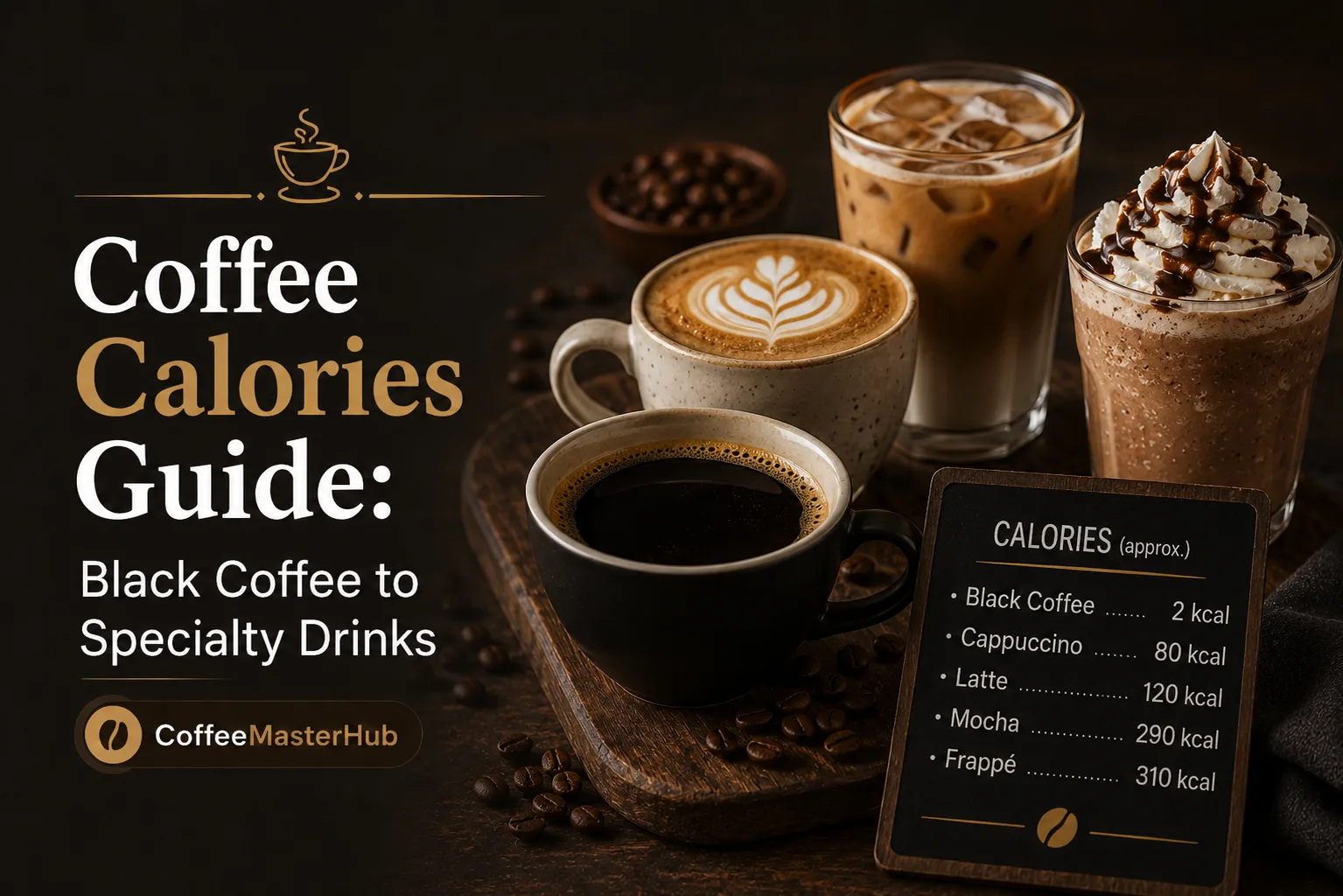
Black coffee contains almost no calories—typically just 2–5 calories per 8-ounce cup, regardless of brewing method. The real calorie count depends on what you add: milk, cream, sugar, and flavored syrups can turn a zero-calorie drink into a 200–400 calorie beverage. If you’re monitoring calories, plain black coffee remains one of the lowest-calorie drinks available.
Most people assume coffee is either calorie-free or a major concern for their diet. The truth is somewhere in the middle, and understanding the actual numbers helps you make smarter choices without guilt. Whether you’re tracking calories for weight management or simply curious about your daily coffee habit, this guide covers everything you need to know.
Black Coffee and Basic Calories
Pure black coffee—just ground coffee and hot water—contains almost no calories. An 8-ounce cup of brewed black coffee has about 2–5 calories, depending on the roast and brewing method.
This minimal calorie content comes from the coffee beans themselves. Coffee is primarily water and air once brewed, with trace amounts of oils and compounds that contribute negligible calories.
The roast level doesn’t meaningfully change the calorie count. Dark roast, medium roast, and light roast all land in the same 2–5 calorie range per cup.
If you drink your coffee black, you’re essentially drinking a zero-calorie beverage. For anyone watching their calorie intake, black coffee is your friend.
How Brewing Methods Affect Calories
The brewing method has almost no impact on black coffee calories. Whether you use a French press, pour-over, instant, espresso machine, or Turkish method, the calorie count stays roughly the same.
The reason is simple: calories come from the coffee solids and oils in the beans, not from the brewing technique itself. All methods extract the same core compounds and leave you with approximately 2–5 calories.
Espresso is a slightly different case because it’s more concentrated. A single espresso shot (1 ounce) contains about 1–3 calories due to its smaller volume, but the calorie density per ounce is similar to regular coffee.
If you’re choosing a brewing method based on calories, there’s no winner. Pick whatever tastes best to you—the calorie impact is negligible.
Adding Ingredients: Where Calories Actually Come From
Black coffee is virtually calorie-free, but most people don’t drink it black. That’s when calories add up quickly.
Here’s what common additions cost you:
| Addition | Amount | Calories |
|---|---|---|
| Whole milk | 1 tablespoon | 9 calories |
| Whole milk | ¼ cup (standard splash) | 37 calories |
| 2% milk | ¼ cup | 30 calories |
| Skim milk | ¼ cup | 10 calories |
| Half-and-half | 1 tablespoon | 20 calories |
| Heavy cream | 1 tablespoon | 52 calories |
| Almond milk | ¼ cup | 3–5 calories |
| Oat milk | ¼ cup | 10–15 calories |
| White sugar | 1 teaspoon | 16 calories |
| Honey | 1 teaspoon | 21 calories |
| Vanilla syrup | 1 ounce | 40–50 calories |
| Caramel syrup | 1 ounce | 50–60 calories |
A typical “light and sweet” coffee—¼ cup whole milk plus one teaspoon sugar—comes to approximately 53 calories. That’s a reasonable trade-off for most people.
But a flavored coffee drink from a café? That’s a different story.
Coffee Calories by Type: Popular Drinks Compared
Coffee shop drinks vary wildly in calorie content. Here’s what you’re actually drinking:
| Drink | Size | Calories | Main Contributor |
|---|---|---|---|
| Black coffee | 8 oz | 2–5 | Minimal |
| Americano | 8 oz | 5–10 | Espresso shots |
| Cappuccino | 8 oz | 80–100 | Steamed milk |
| Latte | 8 oz | 120–180 | Milk volume |
| Macchiato | 8 oz | 80–90 | Small milk portion |
| Flat white | 8 oz | 120–150 | Velvety milk layer |
| Mocha | 8 oz | 200–250 | Chocolate syrup + milk |
| Caramel macchiato | 8 oz | 240–280 | Caramel syrup + milk |
| Vanilla latte | 8 oz | 200–230 | Vanilla syrup + milk |
| Iced coffee (black) | 12 oz | 5–10 | Ice + minimal syrup |
| Iced latte | 12 oz | 150–200 | Milk on ice |
| Flavored iced coffee | 12 oz | 200–350 | Syrup heavy |
The difference between a cappuccino (100 calories) and a caramel macchiato (280 calories) is entirely the added syrups and larger milk-to-espresso ratio. It’s not the coffee itself.
Low-Calorie Coffee Options
If you want coffee with flavor but minimal calories, several approaches work:
Switch to black coffee or espresso. Yes, it’s simple. Black coffee stays under 10 calories no matter the quantity. Many people find it grows on them after a week or two.
Use skim or plant-based milk. A cappuccino made with skim milk (around 60–80 calories) is significantly lower than one made with whole milk or cream. Unsweetened almond milk keeps it even lower—around 30–50 calories total.
Skip the syrup. A plain latte is much lower in calories than a flavored one. If you need sweetness, request a smaller amount of syrup or switch to a zero-calorie sweetener.
Choose americanos over lattes. An americano (10 calories) is espresso plus hot water. A latte is espresso plus steamed milk, which adds volume and calories. If you want milk, ask for a small splash rather than the standard amount.
Ask for light ice and less syrup. At coffee shops, you control the ingredients. Request less syrup, extra ice, or skim milk. Most baristas accommodate these requests without judgment.
Drink instant or black drip at home. Controlling your own coffee means knowing exactly what goes into it. A cup of instant or drip coffee at home with no additions is genuinely zero-calorie.
Common Mistakes About Coffee Calories
Several misconceptions lead people astray:
“Dark roast has fewer calories.” False. The roast level doesn’t meaningfully reduce calories. Dark roast coffee tastes slightly different but delivers the same calorie count as light or medium roasts.
“More water dilutes calories.” True, but negligibly. Adding extra water to your cup lowers calories by maybe 1–2 per addition. The effect is too small to matter.
“Coffee accelerates calorie burn.” Coffee contains caffeine, which slightly increases metabolism, but the effect is minimal—around 3–11 extra calories burned per day for most people. Don’t count on coffee as a calorie-burning strategy.
“Cold brew has fewer calories.” Not really. Cold brew and regular brewed coffee have similar calorie counts because the calories come from the beans, not the brewing temperature.
“Decaf has significantly fewer calories.” Decaf and regular coffee are virtually identical in calories. The decaffeination process doesn’t meaningfully reduce the calorie content.
“Flavored grounds add calories.” Pre-flavored coffee grounds add flavoring oils, but the calorie count still stays minimal. It’s the added syrups and milk that drive up calories, not the coffee itself.
Should You Worry About Coffee Calories?
For most people, the answer is no—but it depends on your habits. If you drink one or two cups of black coffee daily, calories are irrelevant. You’re looking at 10 calories or less.
If you drink specialty coffee drinks regularly, it adds up. Three caramel macchiatos per week (280 calories each) equals 840 calories weekly, or roughly 120 calories per day average. That’s meaningful over time.
The realistic approach: know what you’re drinking, make intentional choices, and don’t feel guilty about enjoying coffee. A latte or cappuccino with regular milk is a perfectly reasonable 120–150 calorie beverage—it’s not a problem unless you’re overdoing high-calorie specialty drinks.
Conclusion
Black coffee remains one of the best low-calorie drinks available, containing virtually no calories on its own. The calorie content of your coffee depends almost entirely on what you add to it—milk, cream, sugar, and syrups are where the real calories hide.
Most commonly consumed coffee drinks fall between 80–250 calories for standard sizes, which is reasonable for many people’s diets. If you’re trying to minimize calories, black coffee or a simple cappuccino with skim milk are your best bets. If you prefer flavored specialty drinks, just be aware of what you’re consuming and adjust other meals accordingly.
The key takeaway: coffee itself isn’t a calorie concern. Your additions are. Make informed choices, enjoy your coffee, and don’t overthink it.
About the Author
Muhammad Hammad Abbas started Coffee Master Hub, where he shares useful coffee guides and brewing tips based on his own research and experience. He works to make coffee knowledge easier to understand and tries out different methods to help readers make better coffee at home.
Frequently Asked Questions
No. The bean variety (arabica, robusta, single-origin) doesn’t meaningfully change calories. All coffee beans deliver approximately 2–5 calories per 8-ounce cup when brewed with just water.
Essentially yes, from a calorie perspective. Black coffee has virtually no calories. However, excessive caffeine intake (400+ mg daily) can cause jitteriness or sleep disruption, regardless of calories.
It depends on the creamer. Liquid coffee creamers typically contain 10–20 calories per tablespoon. Powdered creamers vary widely from 10–40 calories per teaspoon. Many non-dairy creamers are comparable to skim milk in calories.
No. Salt contains zero calories. Some people claim it reduces bitterness, but it doesn’t affect the calorie count of your coffee.