Quick Answer
Good coffee starts with understanding a few essential principles: using fresh, quality beans, grinding them correctly, maintaining proper water temperature, and following consistent timing. When you nail these basics, you’ll notice an immediate difference in flavor compared to coffee made without attention to detail. The good news is that brewing excellent coffee at home doesn’t require expensive equipment or complicated expertise.
Getting these fundamentals right transforms coffee from something you tolerate in the morning into something you genuinely look forward to drinking. It’s one of the easiest kitchen skills to improve with immediate, noticeable results.
Start With Fresh, Quality Coffee Beans
The foundation of good coffee begins before you even brew. Coffee beans start losing flavor immediately after roasting, with noticeable deterioration within two to three weeks. Buying fresh beans from a local roaster or a specialty coffee shop matters far more than most people realize.
Look for roast dates on the bag rather than expiration dates. A bag roasted one to two weeks ago will taste significantly better than beans roasted three months ago. If a bag doesn’t show a roast date, that’s a warning sign the beans might be stale.
Whole beans stay fresher longer than pre-ground coffee. Once you grind beans, they begin oxidizing immediately, losing flavor within hours. Buy whole beans and grind them just before brewing whenever possible. Store beans in an airtight container at room temperature, away from sunlight and heat.
Many people mistakenly freeze coffee or keep it in the refrigerator, which actually accelerates degradation through moisture exposure. A dark cupboard works perfectly.
Understanding Coffee Grind Size
The grind size affects how quickly water extracts flavor from the beans. Finer grinds expose more surface area, allowing faster extraction. Coarser grinds extract more slowly. Matching grind size to your brewing method prevents under-extraction (weak, sour coffee) or over-extraction (bitter, harsh coffee).
For French press or pour over methods, use a coarse grind that resembles breadcrumbs or sea salt. For espresso machines, you need a fine, powdery grind. Standard drip coffee makers work well with a medium grind. The difference between these is genuinely noticeable in the final cup.
A burr grinder produces consistent particle sizes, which matters more than you might think. Blade grinders create uneven pieces with some very fine dust and some larger chunks, resulting in uneven extraction. While burr grinders cost more upfront, they deliver dramatically better results.
Grind immediately before brewing. Coffee grounds lose their aromatic compounds quickly once exposed to air. The delay between grinding and brewing is the difference between vibrant, fresh coffee and flat, tired-tasting coffee.
Water Temperature for Coffee
Hot water is essential, but boiling water actually damages coffee by over-extracting and creating harsh, burnt flavors. The ideal water temperature falls between 195 and 205 degrees Fahrenheit, which is just below boiling. If you don’t have a thermometer, let boiling water cool for about thirty seconds to one minute before pouring. This simple pause makes a meaningful difference in taste. Boiling water at 212 degrees is noticeably too hot for most brewing methods.
Cold water never extracts coffee properly, resulting in weak, under-extracted cups. This is why cold brew requires hours of steeping—you’re compensating for lower temperature by extending contact time dramatically. For regular hot coffee, proper temperature is non-negotiable.
The water quality itself matters too. If your tap water tastes mineral-heavy or has a chlorine smell, filtered water produces better-tasting coffee. Some water contains so many minerals that it interferes with extraction. If you’ve never tried your coffee with filtered water, it’s worth experimenting.
Coffee Brewing Methods Explained
Different brewing methods produce noticeably different flavors because they control extraction differently. Understanding these variations helps you choose a method that matches your preferences and lifestyle. A French press or cafetiere uses immersion brewing, where grounds steep directly in hot water. This produces a full-bodied, rich cup because the metal filter allows coffee oils through. The process takes about four minutes and requires coarse grounds.
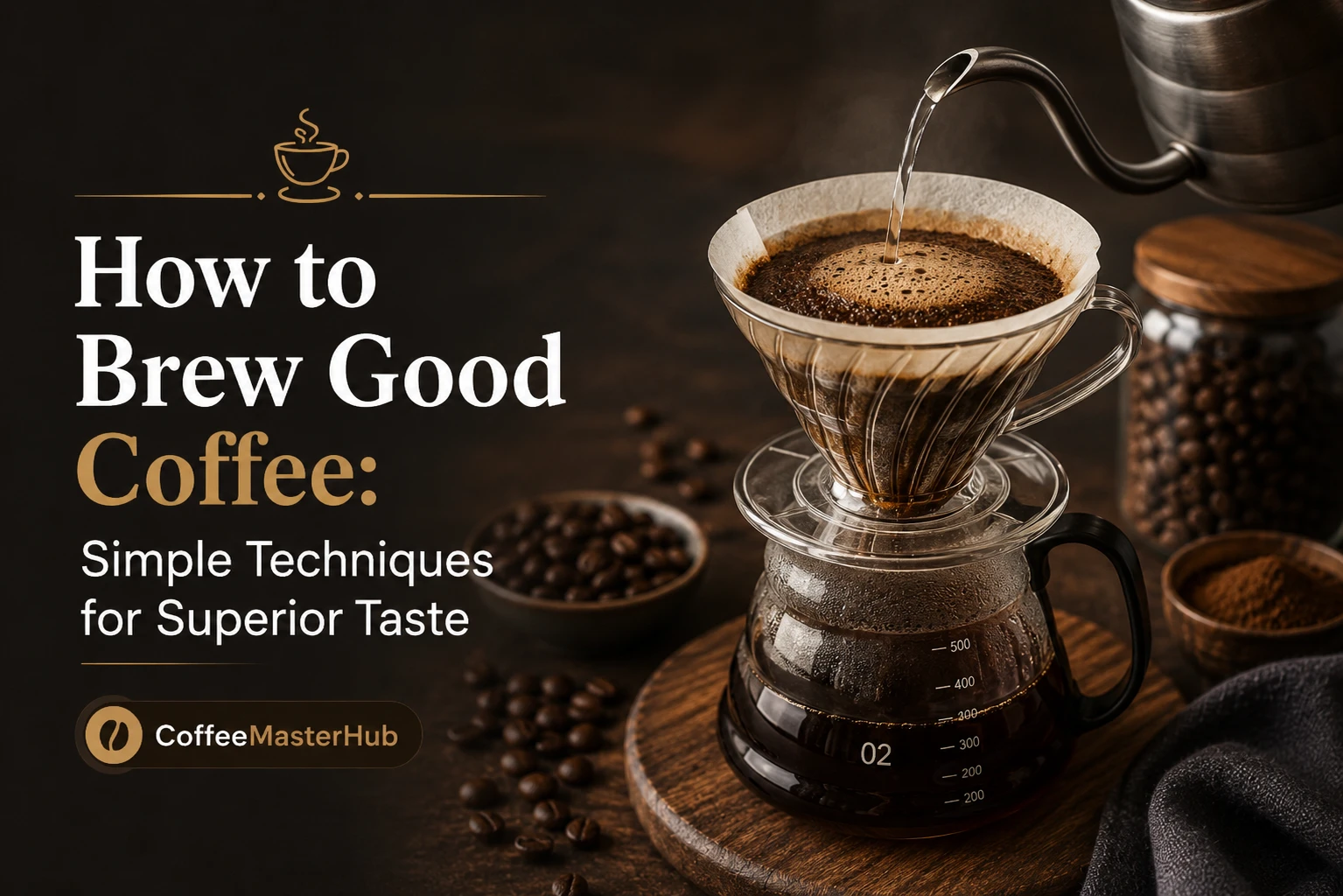
Pour over methods, including cone-shaped brewers and flat-bottomed dripper cones, use gravity to pull water through grounds. This typically produces a cleaner, brighter cup than French press because paper filters trap most oils. Brewing time ranges from three to four minutes depending on the specific device and grind size.
Automatic drip machines offer convenience but often use lower water temperatures and inconsistent brewing times. The quality varies widely between machines. If you enjoy coffee regularly, investing in a better machine or switching to pour over or French press typically produces noticeably superior results.
Espresso machines create pressure-driven extraction, producing concentrated shots in under a minute. This requires fine grounds, precise timing, and more technique than other methods. The payoff is intense flavor and the ability to make specialty drinks.
Getting the Coffee to Water Ratio Right
The standard ratio across most brewing methods is one part coffee to sixteen parts water, though personal preference allows adjustment. Using a kitchen scale removes guesswork—weigh your water, then divide by sixteen to find the correct coffee amount in grams. For example, if you’re brewing six hundred milliliters of water, you’d use roughly thirty-seven grams of coffee.
This ratio produces balanced coffee that isn’t too weak or too strong for most palates. Prefer stronger coffee? Try one to fourteen ratio instead. If you don’t have a scale, two tablespoons of ground coffee per six ounces of water provides a reasonable approximation. Keep the same measuring spoon handy for consistency. Over time, you’ll develop an intuitive sense for proper amounts.
Mastering Coffee Brewing Time
Brewing time varies by method and personal preference, but timing consistency matters more than the exact duration. For French press, four minutes is standard, though you can adjust between three and a half and four and a half minutes. Shorter steeping produces lighter coffee, while longer steeping creates stronger results.
Pour over methods typically take three to four minutes from start to finish. The precise time depends on your grind size and how slowly you pour the water. Finer grinds naturally take longer because water moves through them more slowly. Automatic drip machines should complete brewing within five to eight minutes. If your machine takes significantly longer, the water temperature might be too low or the brew cycle might need adjustment.
Common Mistakes That Ruin Coffee
Using the wrong water temperature ruins coffee more often than any other mistake. Water that’s too hot produces bitter, burnt flavors, while water that’s too cool under-extracts, leaving sour, weak coffee. Grinding coffee the night before destroys the fresh aromatics that make good coffee worth drinking.
Even pre-grinding for a few hours noticeably dulls the flavor. If convenience matters more than peak flavor, pre-ground coffee is acceptable, but you’re sacrificing quality.
Using stale beans creates a flat, lifeless cup that tastes boring no matter how perfectly you execute every other step. Buying from a quality source with visible roast dates prevents this problem. Leaving brewed coffee sitting on a heating element or in the pot with grounds accelerates over-extraction. Pour your coffee into a cup or carafe immediately after brewing. Coffee left sitting becomes progressively more bitter within minutes.
Practical Tips for Better Coffee Today
Invest in a burr grinder before anything else if you’re serious about improvement. This single upgrade makes more difference than expensive machines or specialty beans. Buy beans from a local roaster or specialty coffee supplier who displays roast dates. This single change often improves taste more than any technique adjustment. Use filtered water if your tap water tastes noticeably mineral-forward or has chlorine flavor.
Write down what you did and how the coffee tasted. After a few brewing sessions, you’ll notice patterns and be able to adjust consistently. Start with proper water temperature, appropriate grind size for your method, and correct coffee-to-water ratio. Master these three elements before worrying about advanced techniques.
Conclusion
Brewing good coffee reliably comes down to understanding and controlling a few key variables: bean freshness, grind size, water temperature, brewing method, and timing. None of these require expensive equipment or complicated expertise. When you handle these fundamentals correctly, you’ll notice an immediate improvement in flavor that makes the effort worthwhile.
Start with fresh beans and the right grind size for your preferred brewing method. Use water between 195 and 205 degrees, follow a consistent ratio, and stick to the appropriate timing. Small improvements in each area compound into genuinely excellent coffee that you’ll look forward to drinking every morning. The investment of attention pays for itself immediately through better taste.
About the Author
Muhammad Hammad Abbas started Coffee Master Hub, where he shares useful coffee guides and brewing tips based on his own research and experience. He works to make coffee knowledge easier to understand and tries out different methods to help readers make better coffee at home.
Frequently Asked Questions
Good coffee uses fresh beans ground right before brewing, proper water temperature, correct coffee-to-water ratio, and appropriate timing for the brewing method. Bad coffee often comes from stale beans, incorrect water temperature, wrong grind size, or inconsistent technique. The difference in taste is dramatic and immediately noticeable once you understand what to adjust.
Yes, absolutely. A burr grinder, a simple brewing method like pour over, and a thermometer cost less than fifty dollars total. Quality coffee depends far more on technique and fresh beans than on equipment expense. Many expensive machines produce mediocre coffee because people don’t understand the fundamentals.
Ground coffee loses noticeable flavor within thirty minutes to an hour, with significant quality loss within a few hours. Grinding immediately before brewing produces the best results. If you must grind ahead, use it within an hour for best flavor and never overnight.
Yes, noticeably so. Heavily mineral-filled or chlorinated water produces different-tasting coffee than filtered water. If your tap water tastes mineral-forward, trying filtered water reveals how much water quality contributes to the final flavor. Soft filtered water generally produces better results than hard tap water.