
Quick Answer
How much caffeine in 8 oz cold brew? In most cases, an 8-ounce serving of cold brew contains between 100 and 200 mg of caffeine, depending on the coffee beans used, brewing method, dilution ratio, and brand. This is usually more caffeine than a standard cup of regular brewed coffee.
Introduction
Cold brew coffee has become one of the most popular coffee drinks in recent years. People love its smooth taste, lower acidity, and refreshing flavor. But one question keeps coming up: how much caffeine in 8 oz cold brew? The answer is not as straightforward as many people think. Unlike traditional hot coffee, cold brew is made by steeping coffee grounds in cold water for an extended period, often 12 to 24 hours. This process extracts caffeine differently, and the final caffeine content can vary significantly from one cup to another.
If you’re trying to manage your caffeine intake or simply want to know what you’re drinking, this guide will help you understand exactly how much caffeine is typically found in an 8-ounce cold brew and what factors influence it.
How Much Caffeine in 8 oz Cold Brew?
Most 8-ounce servings of cold brew contain anywhere from 100 mg to 200 mg of caffeine.
Here’s a general comparison:
| Beverage | Serving Size | Approximate Caffeine |
| Cold Brew | 8 oz | 100–200 mg |
| Regular Brewed Coffee | 8 oz | 80–120 mg |
| Espresso | 1 oz shot | 63–75 mg |
| Black Tea | 8 oz | 40–70 mg |
| Energy Drink | 8 oz | 70–150 mg |
As you can see, cold brew often contains more caffeine than regular drip coffee. However, some cold brews are diluted before serving, which can reduce the caffeine content. That’s why two different cold brew drinks may taste similar but contain very different amounts of caffeine.
Why Cold Brew Often Has More Caffeine
Many people assume cold brew is stronger simply because it tastes bold. While flavor plays a role, the real reason comes down to how it’s prepared.
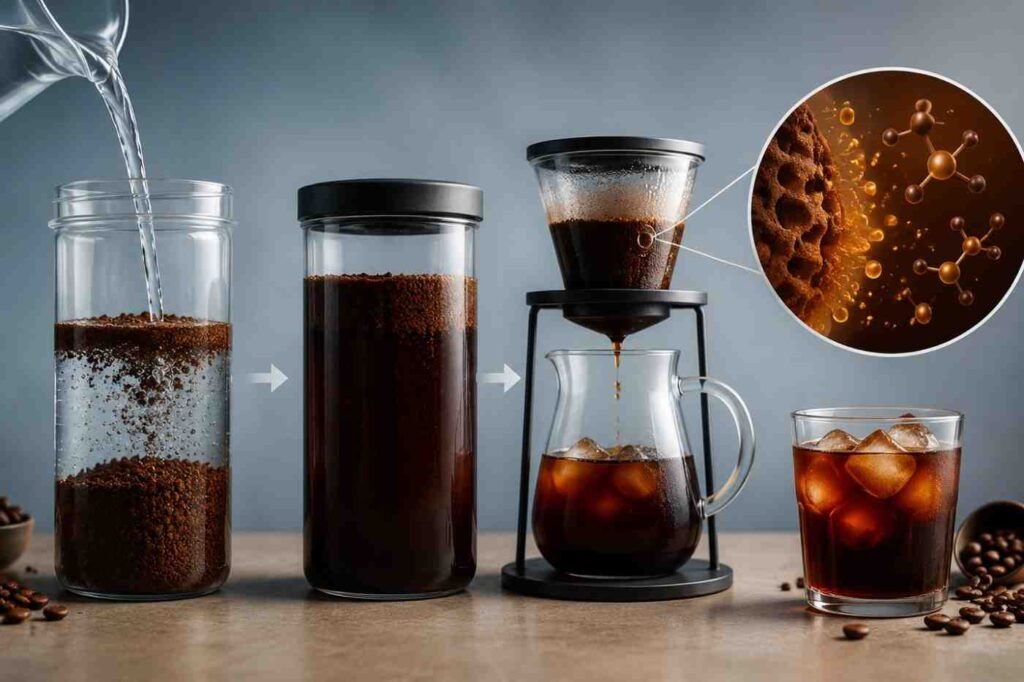
Cold brew is typically made using:
- More coffee grounds
- Longer extraction times
- Concentrated brewing methods
Traditional hot coffee may brew for only a few minutes. Cold brew, on the other hand, can steep for up to 24 hours. This extended brewing time allows more caffeine to be extracted from the coffee beans. The result is often a highly concentrated coffee base that may later be mixed with water, milk, or ice before serving. Even after dilution, cold brew frequently delivers a higher caffeine punch than standard coffee.
Factors That Affect Caffeine Content in Cold Brew
Not every cold brew contains the same amount of caffeine. Several factors influence the final number.
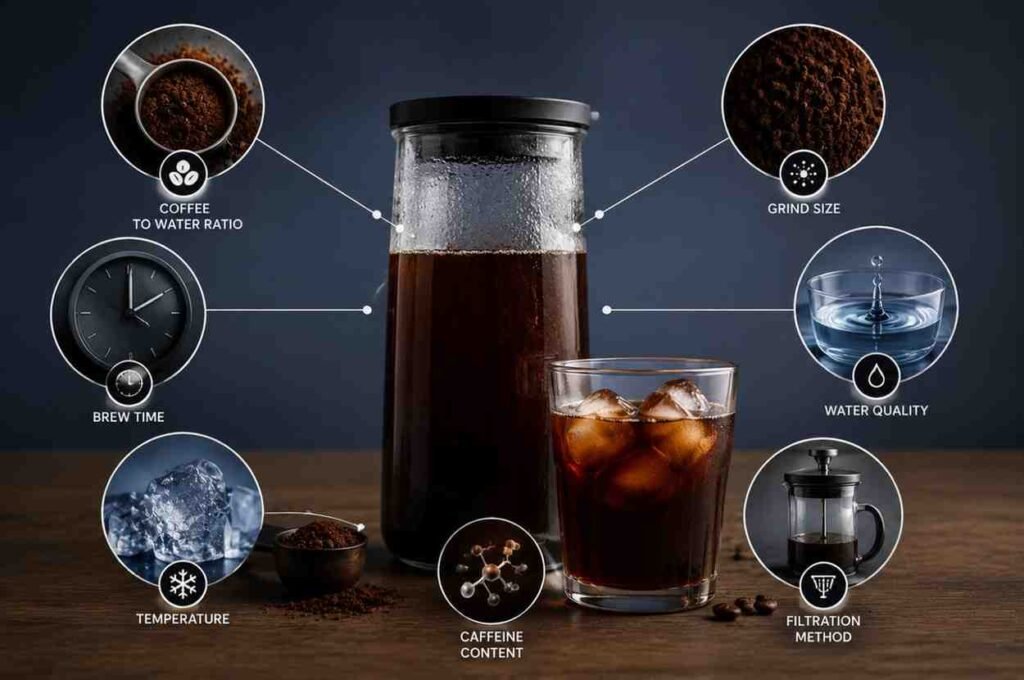
Coffee Bean Type
Different coffee beans naturally contain different caffeine levels.
For example:
- Robusta beans contain significantly more caffeine.
- Arabica beans generally contain less caffeine but offer smoother flavors.
Many specialty cold brews use Arabica beans, while some commercial products blend both varieties.
Coffee-to-Water Ratio
A stronger ratio means more caffeine.
For example:
- A 1:4 ratio creates a highly concentrated cold brew.
- A 1:8 ratio creates a lighter brew.
The more coffee used during brewing, the more caffeine ends up in the final drink.
Brewing Time
Longer steeping periods can increase caffeine extraction.
Most cold brew recipes recommend:
- 12 hours for lighter extraction
- 18–24 hours for stronger extraction
Although caffeine extraction slows after a certain point, longer brewing generally results in a stronger beverage.
Dilution Before Serving
Many coffee shops brew cold brew concentrate and then dilute it.
An 8-ounce serving could be:
- Pure concentrate
- Half concentrate and half water
- Mixed with milk
- Mixed with ice
This dramatically changes caffeine content.
Cold Brew vs Regular Coffee: Which Has More Caffeine?
One of the most common coffee questions is whether cold brew contains more caffeine than regular coffee. The answer is usually yes. A typical 8-ounce cup of drip coffee contains around 80–120 mg of caffeine. An 8-ounce cold brew often contains 100–200 mg. However, serving size matters. Some coffee shops serve cold brew in smaller portions because of its strength. When comparing equal serving sizes, cold brew generally comes out ahead in caffeine content. That said, regular coffee can sometimes contain similar levels if brewed very strong.
Popular Cold Brew Brands and Their Caffeine Levels
Let’s look at some common cold brew products available today.
Starbucks Cold Brew
An 8-ounce serving typically contains approximately 100–120 mg of caffeine. Starbucks serves larger sizes, so total caffeine increases significantly with bigger drinks.
Stok Cold Brew
Stok is known for moderate caffeine levels. An 8-ounce serving usually contains around 95–125 mg of caffeine.
Chameleon Cold Brew
Depending on the variety and dilution, caffeine may range from 120–180 mg per 8 ounces.
Homemade Cold Brew
This is where numbers vary the most.
Homemade cold brew can contain:
- 100 mg per 8 oz on the low end
- More than 200 mg per 8 oz if brewed as a concentrate
The exact amount depends entirely on your recipe.
Is 200 mg of Caffeine in 8 oz Too Much?
For most healthy adults, 200 mg of caffeine is generally considered safe in a single serving. Health experts often recommend staying below approximately 400 mg of caffeine per day. If your morning cold brew contains 200 mg and you drink another caffeinated beverage later, you could reach your daily limit fairly quickly.
People who may be more sensitive include:
- Pregnant individuals
- Those with anxiety disorders
- People with heart conditions
- Individuals sensitive to stimulants
If you experience symptoms such as:
- Jitters
- Rapid heartbeat
- Nervousness
- Sleep problems
You may want to reduce your caffeine intake or choose a less concentrated cold brew.
How to Estimate Caffeine in Homemade Cold Brew
If you make cold brew at home, calculating caffeine precisely is difficult. However, you can estimate. A rough rule is that coffee beans contain about 10–15 mg of caffeine per gram, depending on the variety. If your recipe uses a large amount of coffee grounds and produces a concentrated batch, caffeine levels can rise quickly.
To lower caffeine:
- Use less coffee
- Dilute with more water
- Serve smaller portions
- Choose beans with lower caffeine content
Keeping notes on your recipe can help you create a consistent brew every time.
Benefits of Knowing Your Cold Brew Caffeine Content
Understanding caffeine levels offers several advantages.
Better Energy Management
Knowing how much caffeine you’re consuming helps prevent energy crashes and overstimulation.
Improved Sleep Quality
Caffeine can remain in the body for several hours. Tracking intake can help you avoid sleep disruptions.
Health Awareness
Monitoring caffeine is especially useful if you’re sensitive to stimulants or following medical recommendations.
Smarter Coffee Choices
Not all cold brews are equal. Knowing the caffeine range helps you choose a drink that matches your personal preferences and daily routine.
Tips for Enjoying Cold Brew Without Overdoing Caffeine
If you love cold brew but want to avoid excessive caffeine, consider these tips:
- Start with smaller servings.
- Drink it earlier in the day.
- Add water or milk to dilute concentrate.
- Alternate with decaf coffee.
- Read nutrition labels on bottled products.
These simple habits allow you to enjoy the flavor and smoothness of cold brew without consuming more caffeine than intended.
Conclusion
When people ask how much caffeine in 8 oz cold brew, the most accurate answer is between 100 and 200 mg of caffeine, although some products may fall outside that range. Cold brew often contains more caffeine than regular coffee because it uses more coffee grounds and steeps for a much longer period. Factors such as bean type, brewing ratio, steeping time, and dilution all influence the final caffeine content.
If you’re sensitive to caffeine or simply want better control over your intake, checking product labels or adjusting your homemade recipe can help. With the right balance, cold brew can be a delicious and energizing part of your daily routine.
About the Writer
Muhammad Hammad Abbas started Coffee Master Hub, where he shares useful coffee guides and brewing tips based on his own experiences and research. He works to make coffee knowledge easier to understand and tries out different ways to help people make better coffee at home.