Quick Answer:
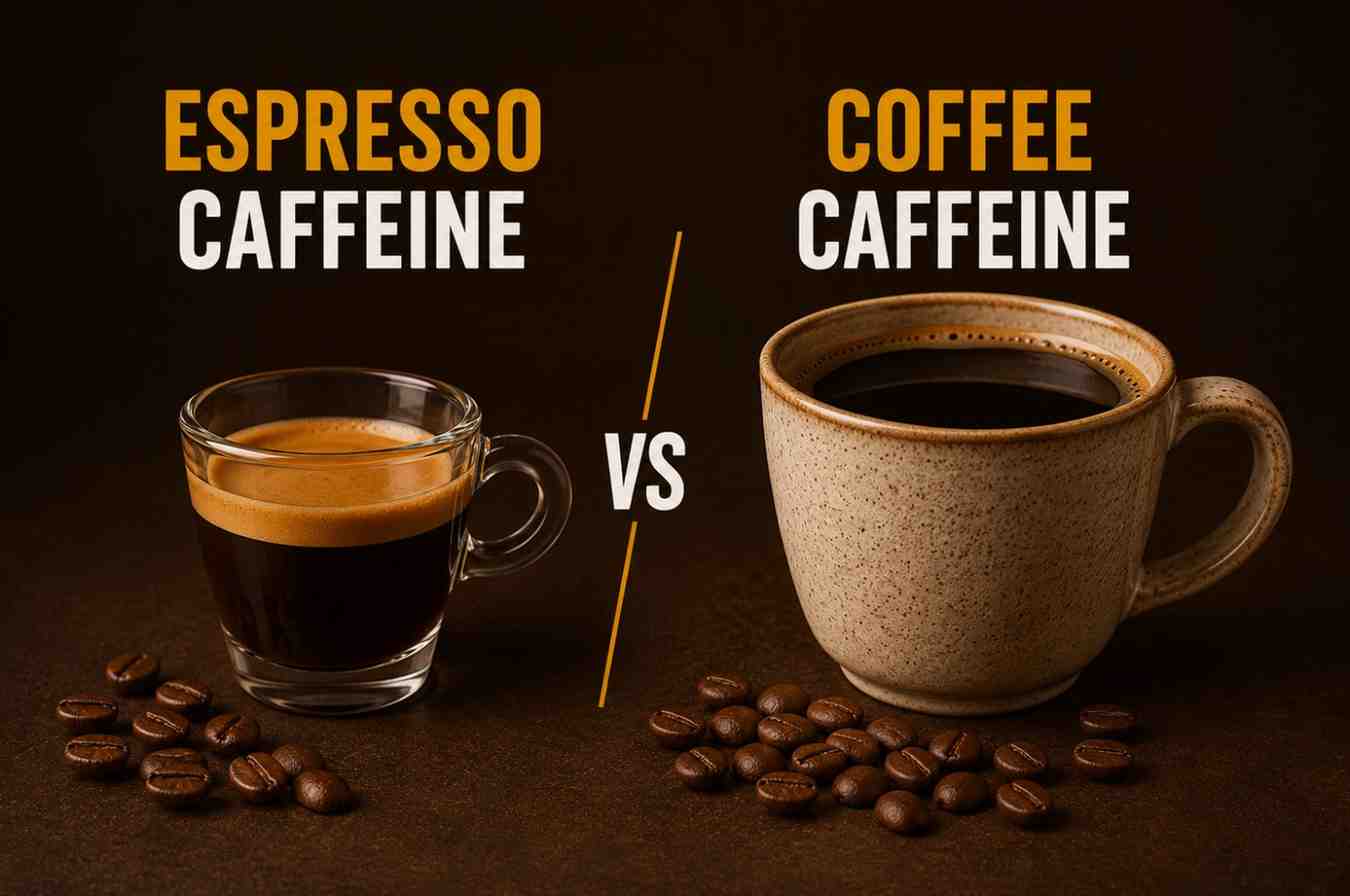
When comparing Espresso Caffeine vs Coffee Caffeine, espresso has more caffeine per ounce, but regular coffee usually has more caffeine per cup overall. Espresso is concentrated and served in small shots, while coffee is diluted and served in much larger servings, which changes how much caffeine you actually end up drinking.
Introduction
If you’ve ever stood at a coffee shop counter wondering whether that tiny espresso shot will hit harder than your usual large coffee, you’re definitely not alone. This is one of those questions that seems simple but actually has a slightly more layered answer than you’d expect. The whole espresso caffeine vs coffee caffeine debate comes down to two things: concentration and serving size. Once you understand those two factors, the confusion pretty much disappears. Let’s walk through it in a way that actually makes sense.
Why This Comparison Confuses So Many People
Here’s the thing that trips most people up. Espresso looks intense. It’s dark, thick, and served in this tiny cup, so your brain automatically assumes it must be packed with way more caffeine than a big mug of coffee. And in a way, that assumption isn’t wrong, just incomplete. Espresso is indeed more concentrated. But concentrated doesn’t automatically mean “more total caffeine in your body.” It just means more caffeine squeezed into a smaller amount of liquid.
A regular cup of coffee, even though it looks watery in comparison, is brewed with a much larger amount of water, which means you’re drinking a bigger volume overall, even if each sip is less potent. Think of it like comparing a shot of hot sauce to a bowl of mildly spicy soup. The hot sauce is stronger per drop, but if you eat the whole bowl of soup, you might end up consuming more spice overall simply because of the quantity.
Espresso Caffeine Content Explained
A standard single shot of espresso, which is about one ounce, typically contains somewhere around 60 to 80 milligrams of caffeine. That’s a pretty concentrated dose for such a small amount of liquid.
Espresso gets its caffeine content from a few specific factors:
- The type of beans used, since robusta beans generally have more caffeine than arabica beans
- The amount of coffee grounds packed into the portafilter
- The brewing pressure and short extraction time
- Whether it’s a single or double shot, since a double shot roughly doubles the caffeine
Most people don’t just drink a plain single shot of espresso on its own. It usually ends up mixed into drinks like lattes, cappuccinos, or americanos, sometimes with two shots instead of one. So the caffeine amount you’re actually drinking depends heavily on how your specific drink was made.
Regular Coffee Caffeine Content Explained
A regular 8-ounce cup of brewed coffee usually contains around 80 to 100 milligrams of caffeine, though this can range quite a bit depending on the brewing method and how strong it’s made.
A few things that affect coffee’s caffeine level include:
- Brewing method, since drip coffee, French press, and cold brew all extract caffeine differently
- Grind size and steeping time
- Bean type, roast level, and how much coffee is used per cup
- Cup size, since many people drink 12, 16, or even 20-ounce servings instead of just 8 ounces
This last point matters a lot. If you’re drinking a large mug or a big to-go cup from a coffee shop, you’re likely consuming two to three times the caffeine of a standard small cup, simply because of the volume.
Espresso Caffeine vs Coffee Caffeine: The Real Comparison
Let’s put this side by side in the simplest way possible.
Per Ounce
Espresso wins here easily. It has significantly more caffeine packed into each ounce compared to brewed coffee, since it’s a concentrated extraction rather than a diluted drink.
Per Serving
This is where things flip. A typical serving of brewed coffee is much larger than a shot of espresso, so even though espresso is stronger ounce for ounce, a full cup of coffee often delivers more total caffeine simply because you’re drinking more of it.
Per Cup of the Same Drink Type
If you compare a small espresso-based drink like a solo shot to a large mug of drip coffee, coffee usually wins in total caffeine. But if you order a double or triple shot espresso drink, it can easily match or exceed a regular cup of coffee. So the honest answer to espresso caffeine vs coffee caffeine isn’t a simple “one is always stronger.” It genuinely depends on serving size, number of shots, and brewing method.
Does Espresso Hit You Faster Than Coffee
This is another common assumption, and there’s some truth to it. Espresso is often consumed quickly, in just a few sips, which means the caffeine enters your system in a short burst. Coffee, on the other hand, is usually sipped slowly over 15 to 30 minutes, so the caffeine gets absorbed more gradually.
This is why espresso can feel like a quicker, sharper energy boost, even if the total caffeine amount ends up being similar or even lower than a full cup of coffee. It’s less about the actual caffeine dose and more about how fast you’re consuming it.
Which One Should You Choose
Honestly, this depends entirely on your lifestyle and what you’re looking for.
Espresso might suit you better if:
- You want a quick caffeine boost without sitting down for a while
- You enjoy bold, concentrated flavor
- You’re short on time in the morning
- You like espresso-based drinks like lattes or cappuccinos
Regular coffee might suit you better if:
- You enjoy slowly sipping your drink over time
- You want a larger serving size
- You prefer a milder, less intense flavor
- You’re trying to manage caffeine intake more predictably throughout the day
Neither option is objectively better. It really comes down to how you like to drink your coffee and how your body responds to caffeine.
A Quick Note on Caffeine Sensitivity
It’s worth mentioning that everyone processes caffeine differently. Some people can drink two espresso shots and feel completely fine, while others get jittery from a single small coffee. Factors like body weight, tolerance, medication, and even genetics play a role in how caffeine affects you.
If you’re someone who’s sensitive to caffeine, it’s smarter to pay attention to total caffeine intake across your whole day, rather than just comparing espresso and coffee in isolation. A few espresso shots plus an energy drink later in the day can add up fast, even if each individual drink seems small.
Conclusion
So when it comes to espresso caffeine vs coffee caffeine, the real answer is that it depends on how you’re measuring it. Espresso has more caffeine per ounce, but regular coffee often has more caffeine per typical serving simply because of its larger size. Neither one is universally stronger, it all comes down to serving size, number of shots, and how the drink is prepared. The best approach is to pay attention to how your body reacts and choose whichever option fits your energy needs and daily routine.
About the Author
Muhammad Hammad Abbas started Coffee Master Hub, where he shares useful coffee guides and brewing tips based on his own research and experience. He works to make coffee knowledge easier to understand and tries out different methods to help readers make better coffee at home.