Quick Answer:
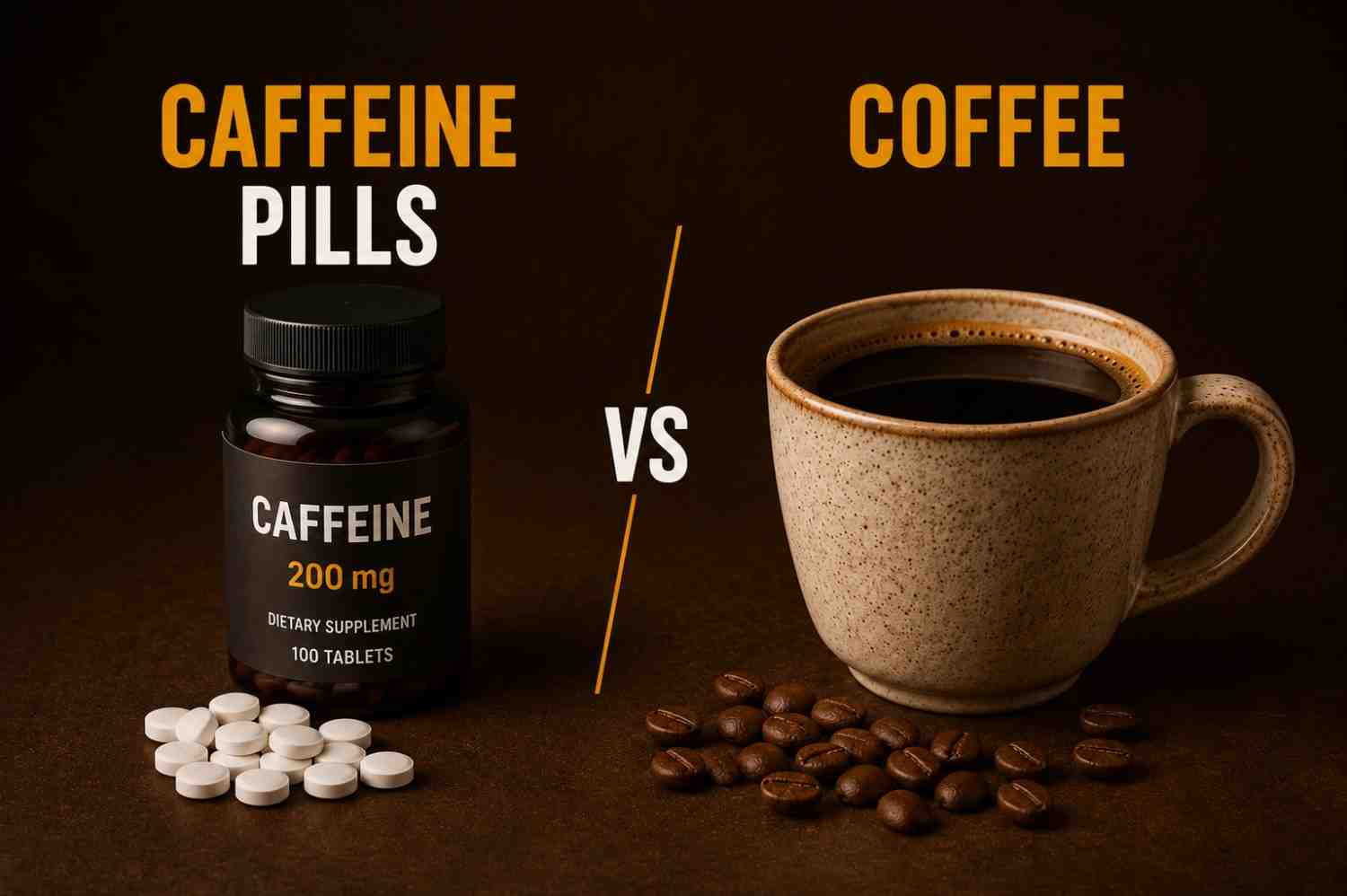
When comparing Caffeine Pills vs Coffee Pills offer a precise, measured dose without any taste or prep time, while coffee delivers a slower, more natural energy boost along with antioxidants and a ritual many people enjoy. Neither is automatically better, it depends on your lifestyle, tolerance, and what you’re trying to get out of your caffeine.
Introduction
If you’ve ever run out of time to make coffee in the morning and thought about just popping a caffeine pill instead, you’re definitely not the only one. This comparison comes up more often than people realize, especially among students, night shift workers, and anyone trying to stay sharp without spending ten minutes brewing a cup. The caffeine pills vs coffee debate isn’t really about which one is “better” in some universal sense.
It’s more about understanding how each one works so you can decide what actually fits your day. Let’s go through it properly.
What Caffeine Pills Actually Are
Caffeine pills are basically concentrated doses of caffeine, usually synthetic, packed into a small tablet or capsule. Most standard caffeine pills contain around 100 to 200 milligrams of caffeine per pill, which is roughly the same as one or two cups of coffee, just without the liquid, the taste, or the wait.
People often reach for caffeine pills because they’re fast, convenient, and consistent. You know exactly how much caffeine you’re getting every single time, which isn’t always true with coffee, since brewing strength can vary a lot depending on how it’s made.
Caffeine pills are commonly used by:
- Students pulling long study sessions
- Night shift workers who need alertness at odd hours
- Athletes looking for a pre-workout boost
- People who simply don’t enjoy the taste of coffee but still want the effects
What Regular Coffee Offers That Pills Don’t
Coffee isn’t just a caffeine delivery system, even though that’s part of the appeal. A cup of coffee also contains natural plant compounds, including antioxidants, which pills don’t have since they’re just isolated caffeine. There’s also the experience itself. Making coffee, smelling it, sipping it slowly, this is part of a daily routine for a lot of people, almost like a small ritual that helps them mentally transition into their day. Caffeine pills skip all of that. You swallow it, and that’s it. Coffee also tends to deliver caffeine more gradually, since you’re sipping it over several minutes rather than swallowing the entire dose in one go. This can lead to a smoother energy curve instead of a sudden spike.
Caffeine Pills vs Coffee: Speed and Absorption
This is one of the biggest practical differences between the two. Caffeine pills are usually absorbed faster because there’s no liquid or food matrix slowing things down. Many people report feeling the effects within 15 to 30 minutes of taking a pill. Coffee, on the other hand, takes a bit longer to kick in, generally somewhere between 30 to 45 minutes, partly because you’re sipping it gradually and partly because your stomach needs to process the liquid first. So if you need a fast, predictable boost, say before a workout or an exam, caffeine pills might feel more reliable simply because the timing is more consistent.
Dosage Control: A Major Difference
Here’s something a lot of people don’t think about until it becomes a problem. With coffee, your caffeine intake can vary quite a bit depending on the bean type, brewing method, and cup size. Two cups of coffee from two different coffee shops can have noticeably different caffeine amounts. Caffeine pills remove this guesswork entirely. Each pill typically has a fixed, labeled amount, so you always know exactly what you’re consuming. This makes it easier to track your daily intake, especially if you’re trying to stay within a certain limit. This dosage precision is one of the main reasons people who are sensitive to caffeine, or who need to carefully manage their intake, sometimes prefer pills over coffee.
Taste, Convenience, and Lifestyle Fit
Not everyone likes the taste of coffee, and that’s completely fine. Some people find it too bitter, too acidic, or just not enjoyable no matter how it’s prepared. For these people, caffeine pills offer all the alertness benefits without needing to develop a taste for coffee. On the flip side, some people genuinely enjoy the process of drinking coffee.
It’s warm, comforting, and gives them something to hold and sip while working or commuting. If that’s part of your routine, a pill just doesn’t replace that feeling. Convenience-wise, pills clearly win if you’re in a rush. No brewing, no cleanup, no waiting for water to heat up. Just grab one and go.
Potential Downsides of Each Option
Neither caffeine pills nor coffee are automatically the safer or healthier choice. Both come with their own considerations. With caffeine pills, since the dose is concentrated and swallowed all at once, some people experience quicker jitteriness, a faster heart rate, or an upset stomach compared to sipping coffee gradually. It’s also easier to accidentally take too much, especially if someone isn’t paying attention to the milligram content on the label.
With coffee, the main downsides are usually related to added sugar, cream, or flavored syrups that people add, which isn’t a caffeine issue but still affects overall health. Coffee can also cause acid reflux or stomach discomfort in some people due to its acidity. If you have any underlying health conditions, take medication, or are pregnant, it’s worth talking to a doctor before relying heavily on either caffeine pills or coffee, since caffeine sensitivity and safe limits vary quite a bit from person to person.
Which One Should You Choose
This really comes down to your personal needs and daily habits.
Caffeine pills might make more sense if:
- You need a fast, no-prep energy boost
- You want precise control over your caffeine dosage
- You don’t enjoy the taste of coffee
- You’re often short on time in the morning
Coffee might make more sense if:
- You enjoy the taste and ritual of drinking it
- You prefer a slower, more gradual energy boost
- You want the added antioxidants that come with coffee
- You don’t mind the extra prep time
Some people even use both, depending on the situation. Coffee in the morning as part of their routine, and a caffeine pill later in the day when they need a quick boost without brewing another cup.
Conclusion
At the end of the day, the caffeine pills vs coffee decision isn’t about picking a clear winner, because both have real advantages depending on what you’re looking for. Caffeine pills offer speed, convenience, and precise dosage control, while coffee offers a slower release, natural antioxidants, and a routine many people genuinely enjoy. The smartest approach is to think about your lifestyle, your caffeine tolerance, and how quickly you need that energy boost, then choose whichever option actually fits your day instead of just following what everyone else does.
About the Author
Muhammad Hammad Abbas started Coffee Master Hub, where he shares useful coffee guides and brewing tips based on his own research and experience. He works to make coffee knowledge easier to understand and tries out different methods to help readers make better coffee at home.