Quick Answer:
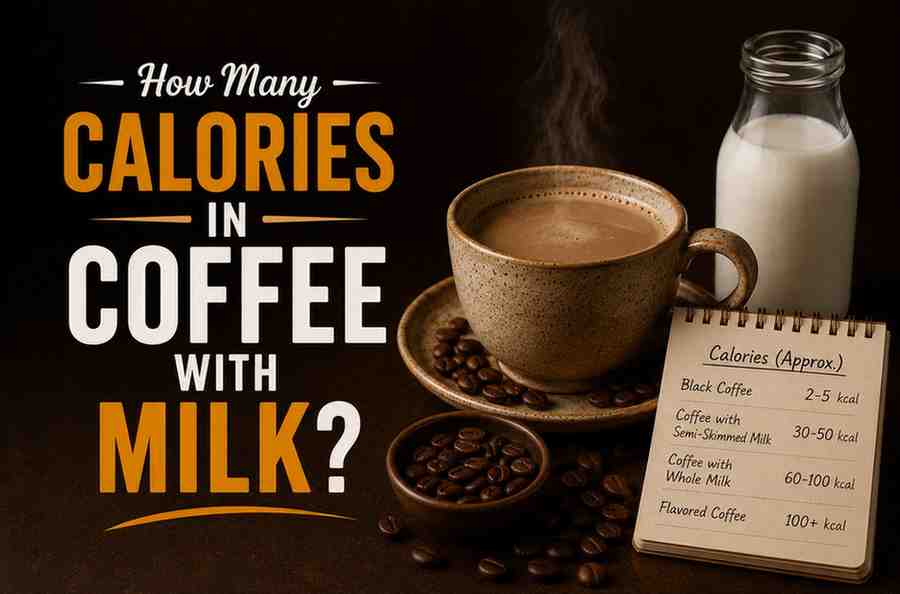
The number of calories in coffee with milk depends on the type and amount of milk used, but on average, a cup of coffee with regular milk adds around 20 to 60 calories. Black coffee alone has almost no calories, so the milk, and any sugar you add, is really what determines the final calorie count.
Introduction
If you’ve ever looked at your morning coffee and wondered exactly how many calories in coffee with milk you’re actually drinking, you’re not overthinking it. It’s a fair question, especially if you’re watching your daily intake or just trying to be a bit more mindful about what goes into your cup every day. The tricky part is that coffee itself is basically calorie-free, so the real answer depends almost entirely on what you’re adding to it.
Let’s break this down in a simple, no-confusion way.
Why Black Coffee Has Almost No Calories
Before we even talk about milk, it helps to understand the baseline. A plain black cup of brewed coffee, with nothing added, has around 2 to 5 calories for an entire cup. That’s basically nothing. Coffee itself is just water and coffee grounds, so there’s no fat, sugar, or protein sitting in there to add up.
This is important because it means every calorie you’re drinking in your coffee with milk is coming from the milk itself, or from anything else you’re adding on top, like sugar, flavored syrups, or whipped cream. So really, the question isn’t “how many calories does coffee have,” it’s “how many calories does the milk in my coffee add.”
How Many Calories in Coffee With Milk, Based on Milk Type
This is where things really start to vary, since not all milk is created equal when it comes to calories. Here’s a general breakdown for about one tablespoon to a small splash of milk added to a standard cup of coffee.
Whole Milk
A splash of whole milk, around 2 tablespoons, adds roughly 20 to 30 calories to your coffee. Whole milk has more fat, which naturally means more calories per ounce compared to lower-fat options.
Skim or Low-Fat Milk
Skim milk is noticeably lighter, adding somewhere around 10 to 15 calories for the same small amount. Since the fat is removed, the calorie count drops quite a bit, though you also lose some of that creamy texture people enjoy.
Half and Half
This one is richer, so it adds more calories, often around 40 to 50 calories for just a splash, since it’s a combination of milk and cream.
Plant-Based Milk
Almond milk tends to be lower in calories, often adding just 5 to 15 calories for a small splash. Oat milk is a bit higher, usually around 15 to 25 calories, since it naturally contains more carbohydrates. Soy milk sits somewhere in the middle, generally around 10 to 20 calories for the same amount. So if you’re asking how many calories in coffee with milk specifically, the honest answer is that it really depends on which type of milk you’re pouring in, and how much of it you use.
Does the Amount of Milk Really Matter That Much
Yes, actually, this matters more than most people realize. A small splash of milk in your coffee is very different from a coffee that’s almost half milk, like a latte or a cortado. For example, a small home-brewed coffee with just a tablespoon or two of milk might only add 15 to 30 calories total.
But a café-style latte, which contains a much larger amount of steamed milk, often 8 to 12 ounces worth, can easily add 100 to 150 calories or more, depending on the type of milk used. This is why your regular homemade coffee with milk and a café milk-based drink can have wildly different calorie counts, even though both technically fall under “coffee with milk.”
What About Sugar and Flavored Syrups
Milk isn’t usually the only thing people add to their coffee. Sugar, flavored syrups, and sweeteners can quickly increase the calorie count, sometimes even more than the milk itself. A single teaspoon of sugar adds around 16 calories. If you’re adding two or three teaspoons, which a lot of people do without really thinking about it, that alone can add up to 30 to 50 extra calories, on top of whatever the milk contributes.
Flavored syrups used in cafes, like vanilla or caramel, often add even more, sometimes 20 to 50 calories per pump, depending on the brand and portion size. So if you’re ordering a flavored coffee with milk and multiple pumps of syrup, your total calorie count can climb much higher than a simple homemade cup with just plain milk.
A Quick Comparison of Common Coffee With Milk Drinks
To make this easier to picture, here’s roughly how different popular coffee drinks compare in calories, assuming standard preparation with regular milk.
- Coffee with a splash of milk: around 20 to 30 calories
- Latte, medium size: around 120 to 180 calories
- Cappuccino, medium size: around 80 to 120 calories
- Flat white: around 90 to 130 calories
- Coffee with milk and sugar: around 50 to 80 calories
These numbers can shift depending on the exact size of the drink, the specific brand or café, and how much milk or sugar is actually used, but this gives you a fairly realistic picture of what to expect.
How to Keep Your Coffee With Milk Lower in Calories
If you enjoy your coffee with milk but want to keep the calorie count on the lighter side, there are a few simple changes that make a real difference.
- Choose skim milk or a lower-calorie plant-based milk instead of whole milk or half and half
- Use less milk overall, sticking to a small splash rather than filling the cup halfway
- Skip added sugar, or use less than you normally would
- Avoid flavored syrups, or ask for a smaller amount if ordering from a cafe
- Stick to smaller cup sizes rather than large or extra-large servings
None of these changes require giving up your coffee with milk completely. It’s really just about being aware of the small choices that quietly add up over time.
Conclusion
So, how many calories in coffee with milk really comes down to two things: the type of milk you use and how much of it you’re adding. Black coffee itself is essentially calorie-free, so the milk, along with any sugar or syrup, is what actually determines your final calorie count. A simple splash of milk barely changes anything, while a large milk-based drink from a cafe can add up quickly. Once you understand where the calories are actually coming from, it becomes much easier to enjoy your coffee with milk in a way that fits your daily goals, without needing to give up the drink you love.
About the Author
Muhammad Hammad Abbas started Coffee Master Hub, where he shares useful coffee guides and brewing tips based on his own research and experience. He works to make coffee knowledge easier to understand and tries out different methods to help readers make better coffee at home.