Quick Answer
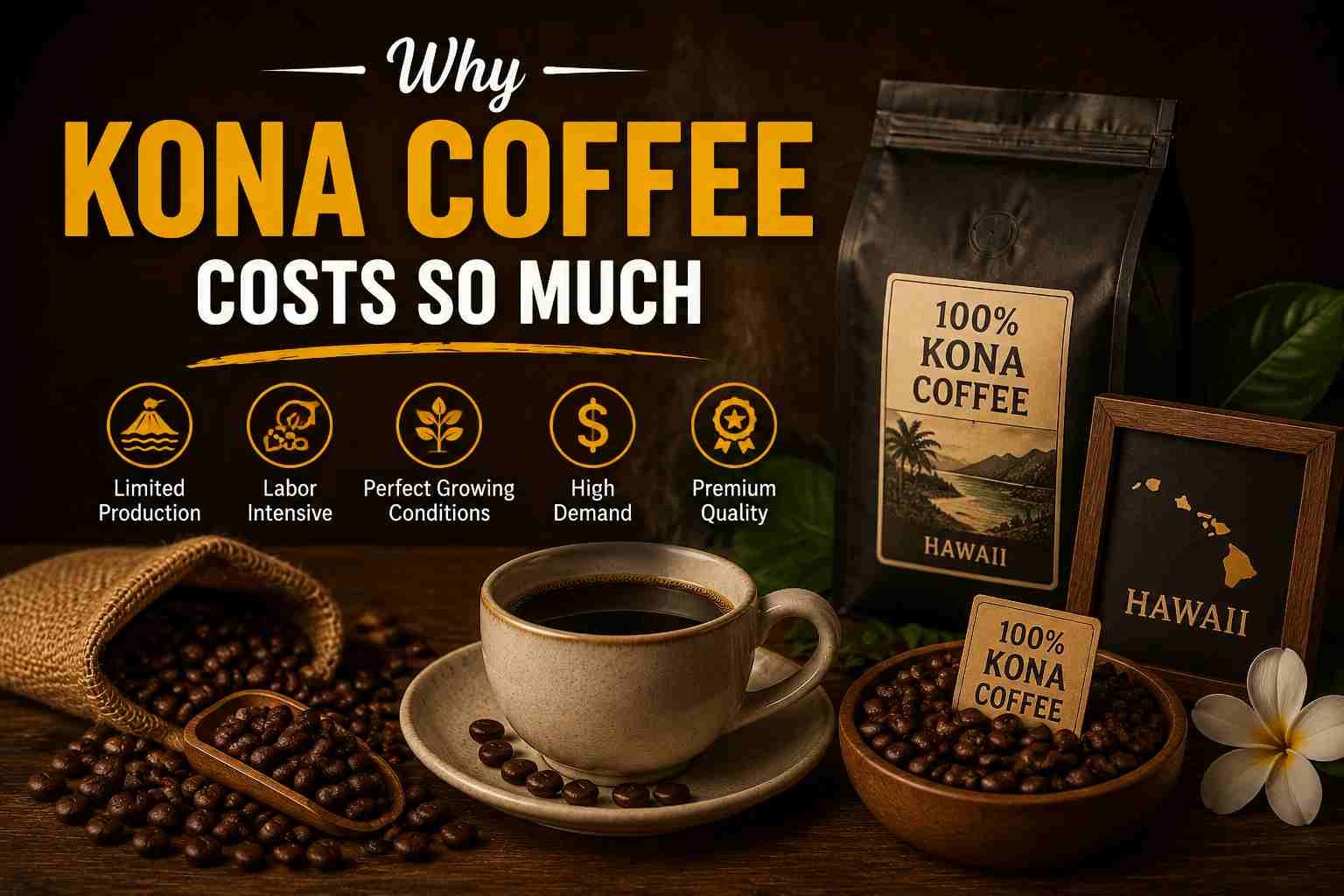
Why is Kona Coffee so expensive comes down to limited land, high farming costs, and careful hand-picking methods used in Hawaii’s Kona region. The beans are grown in small quantities, processed with strict quality control, and in high demand worldwide, which naturally pushes the price higher than regular coffee.
Introduction
Coffee lovers often notice something interesting when they explore premium beans Kona coffee almost always comes with a heavy price tag. At first glance, it may feel like just another coffee variety, but once you understand where it comes from and how it’s produced, the price starts to make sense.
Kona coffee is grown in a very specific region, and that alone creates a rare supply situation. But rarity is just one piece of the puzzle. There are several other factors behind the cost, from farming conditions to labor intensity and even global demand.
Let’s break it down in a simple way so you can understand exactly why this coffee is considered one of the most expensive in the world.
Why is Kona Coffee so expensive: Limited growing region in Hawaii
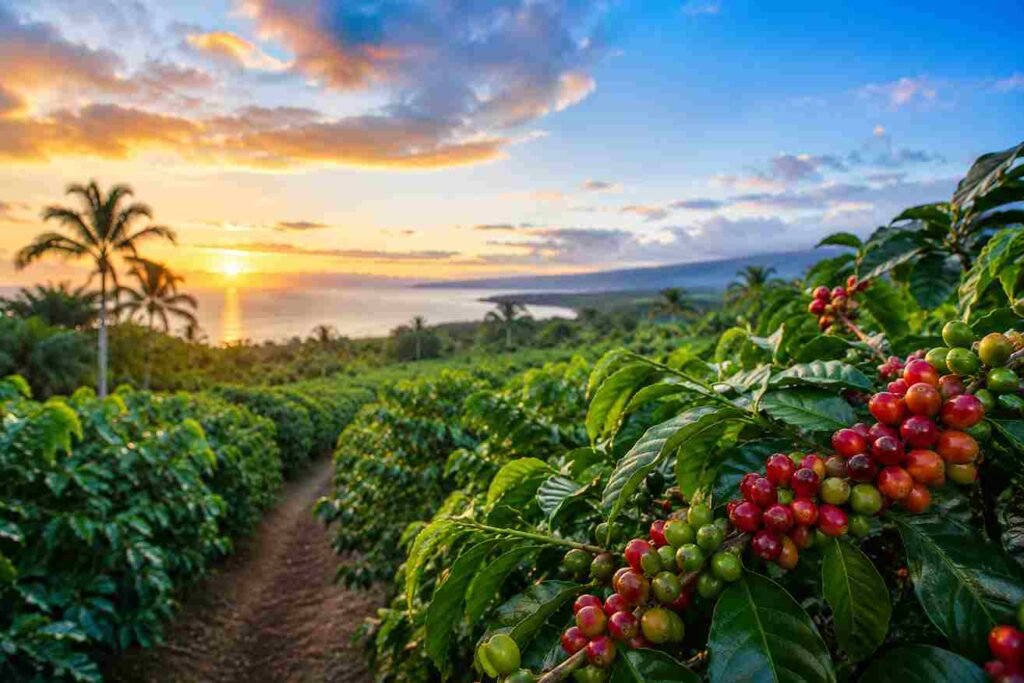
One of the biggest reasons behind the high price is geography. Kona coffee is grown only in the Kona district on the Big Island of Hawaii, a very small strip of land with unique volcanic soil and climate conditions. This region offers the perfect mix of sunny mornings, rainy afternoons, and rich mineral soil. But the key issue is scale. Unlike other coffee-producing countries that have vast farmland, Kona coffee comes from a very limited area.
Because of this restriction, farmers cannot simply expand production to meet global demand. The supply stays naturally low, while demand continues to grow. In economics, this imbalance is one of the clearest reasons prices rise. To make things even more challenging, land in Hawaii is expensive, and farming costs are significantly higher than in many coffee-producing countries. All of this adds up before a single bean is even harvested.
Labor-intensive farming and hand-picking process
Another major reason behind the cost is the amount of human effort involved in producing Kona coffee. Unlike mass-produced coffee, Kona beans are not harvested using machines. Farmers rely heavily on hand-picking, which means workers carefully select only the ripest cherries. Since coffee cherries on the same tree do not ripen at the same time, this process has to be repeated multiple times throughout the season.
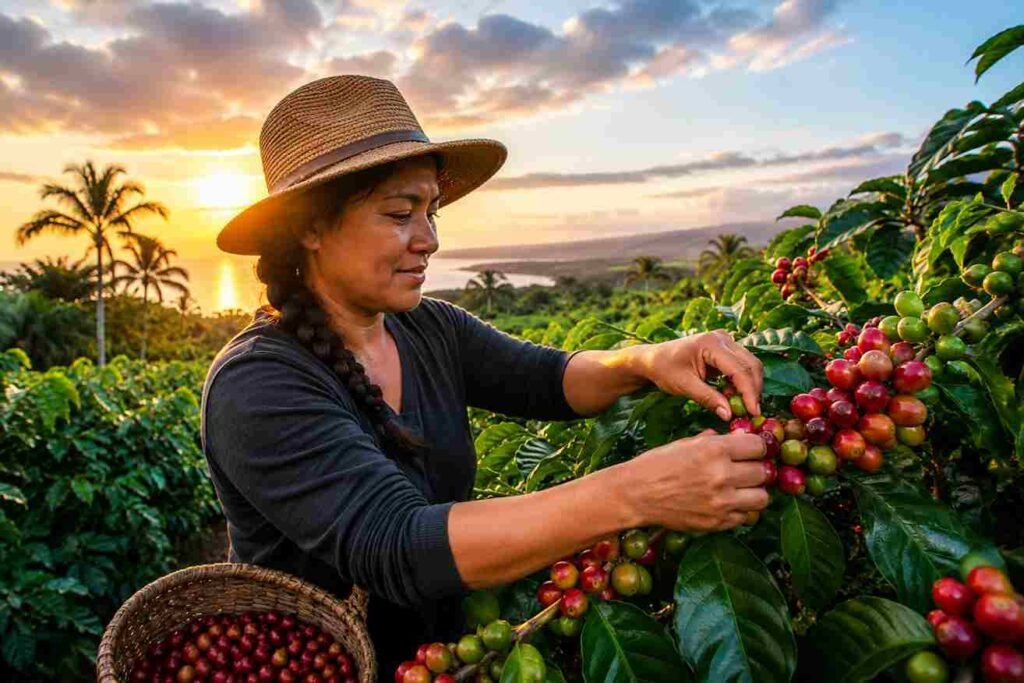
This is slow, detailed work. It requires skill, patience, and a trained eye. Naturally, this increases labor costs significantly. After harvesting, the beans go through careful processing, including washing, drying, and sorting. Each step is done with attention to quality rather than speed. This is one reason Kona coffee is often classified as a specialty coffee, where quality matters more than quantity. Compared to commercial coffee production, where machines handle most of the work, Kona coffee farming is much more hands-on. And when labor costs rise, so does the final price of the product.
High production costs and strict quality control
Beyond farming and harvesting, Kona coffee must meet strict quality standards before it can be sold under the Kona name. Not every bean grown in the region qualifies. The grading system ensures only high-quality beans are labeled as pure Kona coffee. Beans that don’t meet the standard are either downgraded or mixed in blends. This quality filtering process naturally reduces the final output.
Farmers also deal with high production costs such as:
- Expensive land maintenance in Hawaii
- Higher wages for agricultural workers
- Pest control and environmental care
- Transportation and export costs
On top of that, Kona coffee farms are often small family-owned operations rather than large industrial farms. Smaller farms mean less efficiency in bulk production, but they also mean more attention to detail. All of this creates a product that is carefully crafted but expensive to produce. When production costs rise at every stage, the final retail price reflects it.
Demand, branding, and authenticity issues
Kona coffee has built a strong reputation over the years, and that reputation plays a big role in its pricing. Many coffee drinkers associate it with luxury, smooth flavor, and premium quality. Because of this reputation, demand is high not just in the United States but globally. When demand increases faster than supply, prices naturally go up even more. However, there is another important factor: authenticity.
Only coffee grown in the Kona district can legally be labeled as 100% Kona coffee. But in the market, you will often find blends labeled as “Kona coffee blend,” which may contain only a small percentage of real Kona beans mixed with other coffees. Pure Kona coffee is much rarer and therefore more expensive. Unfortunately, this also creates confusion for buyers, and many people unknowingly pay premium prices for blended versions. This strong branding and limited authenticity further push the value of genuine Kona coffee higher in the market.
Is Kona coffee worth the price?
This is where personal preference comes in. Kona coffee is known for its smooth, mild flavor, low acidity, and slightly sweet undertones. Many people describe it as easy to drink and well-balanced compared to stronger, more bitter coffees. However, whether it is worth the price depends on what you value in coffee.
If you enjoy exploring Hawaiian coffee beans and appreciate carefully grown, high-quality beans, then Kona coffee can be a memorable experience. It offers a taste that reflects its unique environment and careful production process. On the other hand, if you drink coffee mainly for caffeine or prefer stronger and more budget-friendly options, you might not feel the price difference is justified. In short, Kona coffee is not just about taste—it’s also about rarity, craftsmanship, and origin.
Conclusion
Kona coffee earns its high price because of a combination of factors: limited farming land in Hawaii, labor-intensive hand-picking, strict quality control, and strong global demand. Add in high production costs and its premium reputation, and the price becomes easier to understand. It’s not just coffee—it’s a product shaped by nature, tradition, and careful human effort. While it may not be an everyday choice for most people, it remains a standout option in the world of specialty coffee.
About the Writer
Muhammad Hammad Abbas started Coffee Master Hub, where he shares useful coffee guides and brewing tips based on his own experiences and research. He works to make coffee knowledge easier to understand and tries out different ways to help people make better coffee at home. Categories